Do these 3 things before closing this tab:
1Scan for outdated or missing drivers - takes under a minute2Clear out junk files and repair common Windows errors3Fix the driver behind crashes, sound loss and screen glitchesThe Geeks Club is reader-supported. When you buy through links on our site, we may earn an affiliate commission. As an Amazon Associate I earn from qualifying purchases. Learn more
Machine learning is a rapidly growing field that allows computers to learn patterns from data and make predictions or decisions without explicit programming. Python has become one of the most popular programming languages for machine learning due to its simplicity and the vast array of libraries and tools available. If you’re new to machine learning and wondering how to create a machine learning model in Python, this guide will walk you through the steps involved in building your first model, from data preprocessing to model evaluation. By the end of this blog, you will understand the essential components of a machine learning project and how to create a machine learning model in Python, using popular libraries like Scikit-learn, Pandas, and NumPy.
1. Set Up Your Python Environment
Before diving into the actual code, you’ll need to set up your Python environment. The most common tools for data science and machine learning in Python include the following libraries:
General shopping ads
Pandas: A powerful library for data manipulation and analysis.
NumPy: Essential for numerical computing and handling large datasets.
Scikit-learn: A machine learning library that provides simple and efficient tools for data mining and data analysis.
Matplotlib (optional): A library for data visualization.
To install these libraries, you can use pip:
PC Slower Than It Used to Be?
A free scan shows the junk files, broken settings and background clutter dragging Windows down - then fixes them in one click.Free scan · Windows 10 & 11Outdated Drivers Are Slowing You Down
One free scan finds every outdated or missing driver and matches the right update for your exact hardware.Free scan · exact hardware matchbash
Copy
pip install pandas numpy scikit-learn matplotlib
Make sure to also set up a Python IDE or editor, such as Jupyter Notebook or PyCharm, to write and run your code.
Shopping ad
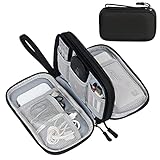
- Dimensions: 7.5" x 4.3" x 2.2". Compact size and lightweight make it easy to carry and put into your backpack, handbags or laptop bag without taking much space. Suitable for family use and daily organization. Note: Small mesh pockets are ideal for charging cords no longer than 3ft; longer cables (over 3ft) fit better in the larger compartments
- Quality Material: This electronic organizer travel case made of high quality durable waterproof oxford and soft sponge inside to secure your gadgets in place and deliver a quick access whenever you want. Water-resistant fabric protects your gear from unexpected splashes, keeping all your electronic essentials safe and secure
- Double Layers Design: This tech pouch features a double-layer interior design with 8 compartments, including multiple see-through mesh pockets and ample space to store your cords, cables, USB drives, cellphone, charger, mouse, flash drive and more, keeping all accessories neatly organized and tangle-free
- Practical and Convenient: Comes with a comfortable hand strap for easy carrying; You may carry it in your hand when heading out. Durable and smooth zipper closure keeps your favorite device securely, convenient for you to have quick access to the items inside the case
- Portable and Lightweight: The small size and lightweight design durable cable organizer pouch is a perfect choice when going on holiday, business trip, travel, office. Enjoy hassle-free travel without wasting time on tangled accessories. Great gift for yourself also a nice share with families and friends. (No include cords, electronic accessories)
2. Import the Necessary Libraries
Now that you have your environment set up, let’s import the libraries we need for our machine learning model.
python
Copy
import pandas as pd
import numpy as np
import matplotlib.pyplot as plt
from sklearn.model_selection import train_test_split
from sklearn.preprocessing import StandardScaler
from sklearn.ensemble import RandomForestClassifier
from sklearn.metrics import accuracy_score, confusion_matrix
Pandas: For data manipulation.
NumPy: For array manipulation.
Matplotlib: For plotting data (optional but useful).
Scikit-learn: For machine learning algorithms and utilities.
3. Load and Explore the Data
The first step in creating a machine learning model in Python is to gather and explore your data. You can either use your dataset or download an example dataset like the Iris dataset, which is a commonly used dataset in machine learning.
Let’s load the dataset and inspect it:
python
Copy
# Load the dataset
data = pd.read_csv(‘path_to_your_dataset.csv’)# Display the first few rows of the dataset
print(data.head())
# Show data types and basic statistics
print(data.info())
print(data.describe())
This step is crucial for understanding the structure of your data, identifying any missing values, and getting a sense of the features (columns) that might be useful for prediction.
What’s actually slowing this PC down?
Pick the symptom - the matching free tool is one click away.
Shopping ad

- 【UPGRADED LAPTOP CLEANING KIT 】 The macbook cleaning kit computer screen cleaner comes with a number of accessories including a retractable large brush, polishing cleaning cloth X 2, keycap puller, metal pen tip, flocking sponge, thin soft brush, soft plastic lens cleaning pen, 5 replacing cloth, large cleaning microfiber cloth. You deserve the comprehensive computer cleaning kit keyboard vacuum at a low cost
- 【PROFESSIONAL KEYBOARD CLEANING KIT】 The laptop screen cleaner keyboard cleaner can pull out the keycaps of gaming keyboards and mechanical keyboards. A retractable keyboard brush works on laptops and keyboards, while the mini high-density brush is great for deep cleaning between keys for cleaning between flatter keys on a laptop, the metal pin tip gently removes any stains. This electronic cleaning kit macbook cleaner totally meets professional cleaning needs
- 【OFFICE DESK ACCESSORIES】This keyboard cleaner kit is easy to use and can clean your keyboard and electronic screen with just one swipe. Wiping with the 2mm thicken widen polishing cleaning cloth designed at a right angle for better fitting screen corners of computers with our recyclable cleaning spray, The laptop cleaner kit for macbook effectively absorbs stubborn stains, leaves no discoloration, no streaks, and no fiber shedding on the screens
- 【MULTIFUNCTIONAL TOOLS 】Mini soft brush and soft plastic lens cleaning pen are specially designed for DSLR camera screen, lens, and other delicate surfaces. 5 more cleaning cloths of it supplied for replacement. The flocking sponge is an excellent tool for cleaning earbuds charging cases, And the earbud cleaning kit is ideal. This electronics for college students is equivalent to 10 other electronic cleaning kit
- 【PORTABLE DESIGN & CLEANER TOOL】 The office supplies is compact in design, easy to carry, and you can easily take it anywhere. It's convenient to keep one in a drawer, one in your car, or in your bag and dorm. It is easy to use and can clean your keyboard and electronic screen with just one swipe. Is the college essentials cleaning tool for your friends, family, colleagues and students
4. Preprocess the Data
Before you can train a machine learning model, the data needs to be preprocessed. This includes steps such as handling missing values, encoding categorical variables, and scaling the data.
Handle Missing Values:
You may encounter missing values in your dataset, and it’s essential to handle them before training the model.
python
Copy
# Check for missing values
print(data.isnull().sum())# Fill missing values with the mean (for numerical columns)
data.fillna(data.mean(), inplace=True)
Encode Categorical Variables:
If your dataset contains categorical variables (like ‘Yes’ or ‘No’), you’ll need to encode them into numerical values.
python
Copy
# Example: Encode a categorical column
data[‘Category’] = data[‘Category’].map({‘Yes’: 1, ‘No’: 0})
Feature Selection:
Depending on your problem, you may want to select a subset of features that are most relevant for prediction. In this case, let’s assume we’re working with a classification problem.
python
Copy
# Example: Select features and labels
X = data.drop(‘Target’, axis=1) # Features
y = data[‘Target’] # Labels
Shopping ad

- Compatible Space: This electronics organizer bag features 2 zippered mesh pockets fits phones, standard power banks, 4 elastic loop pouches for small items, 2 elastic loop pouches for wireless headphones and small chargers. Elastic loops for phone charging cable. And specific slots for SD cards. Please check the size to ensure it meets your needs
- Lightweight Travel Accessories: The size of the electronic organizer travel case is 10.6" L x 7.5" W x 1.2" H, Compact but substantial size fits your intended bag or space. Suitable for traveling use and daily organization
- Keep Everything Organized: This compact travel organizer features dedicated compartments for your phone charger, cables, and tech accessories, keeping them tangle-free and ready to go. You can find travel accessories quickly, no chasing cords in your pack anymore
- Durable Travel Essentials: Features double zippers for easy access, elastic loops with non-slip grips for daily protection. Organizer for office use and traveling, (Not including cords, electronic accessories). It can serve as a travel checklist. Before you leave a place, just open the case and check if everything is there, preventing you from leaving things behind
- Versatile Use: Its practicality and convenience make it a travel essential bag. It is suitable for a weekend trip, business trip, and travel. This organizer pouch is suitable for office, business, daily use and can be given as a gift for friends, family, or men, for birthdays, Valentine's Day, Christmas Day, Father's Day
Feature Scaling:
Many machine learning algorithms perform better when features are on a similar scale. You can scale the data using StandardScaler.
Quick wins for a faster PC:
Clear out junk files and repair common Windows errorsFree Scan →Fix the driver behind crashes, sound loss and screen glitchesFind Drivers →python
Copy
scaler = StandardScaler()
X_scaled = scaler.fit_transform(X)
5. Split the Data into Training and Test Sets
Once the data is preprocessed, you need to split it into training and test sets. The training set is used to train the machine learning model, and the test set is used to evaluate its performance.
python
Copy
# Split the data into training and test sets
X_train, X_test, y_train, y_test = train_test_split(X_scaled, y, test_size=0.2, random_state=42)
In this case, we use 80% of the data for training and 20% for testing.
6. Choose and Train a Model
Now, it’s time to choose a machine learning algorithm. For this example, we’ll use a Random Forest Classifier, which is a popular and powerful model for classification tasks.
python
Copy
# Initialize the model
model = RandomForestClassifier(n_estimators=100, random_state=42)# Train the model on the training data
model.fit(X_train, y_train)
Shopping ad
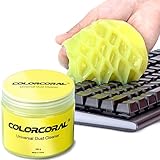
- Universal fit: ColorCoral cleaning gel, simple and convenient cleaning kits for PC/laptop keyboard and other rugged surface, such as the car vent, camera, printer, telephone, calculator, Instrument, speaker, air conditioner, TV and other appliances
- Safe cleaning gel: The keyboard cleaner gel is made from natural gel, no sticky to hands, smells sweet with lemon fragrance, no stimulation to skin
- Easy dust cleaning: Make sure your hands are dry and clean, knead the cleaning gel into a ball, press the cleaning gel slowly into the keyboard, car vent and rugged surface till the cleaning gel could touch the bottom and then pull out, the dust would be carried away with the cleaning gel
- Reusable: The keyboard cleaning gel could be used repeatedly till the color turn to dark or it become sticky, then you have to replace the cleaning gel with a new one. After cleaning, please stock the cleaning gel in cool place. (Note: Don’t wash the gel in water.)
- In the package: 1 can of universal cleaning gel, we provide the cleaning gel with brand new, if you find the package broken, the cleaning gel dirty, or any other quality issues, please email us through message, we provide you new one soon
The RandomForestClassifier creates a forest of decision trees and combines their predictions for better accuracy. In this example, we’re using 100 trees (n_estimators=100).
7. Evaluate the Model
After training the model, it’s time to evaluate its performance on the test data. You can use several metrics, such as accuracy, precision, recall, and the confusion matrix.
Recommended Free Tools
python
Copy
# Make predictions on the test data
y_pred = model.predict(X_test)# Calculate accuracy
accuracy = accuracy_score(y_test, y_pred)
print(f’Accuracy: {accuracy * 100:.2f}%’)
# Display confusion matrix
cm = confusion_matrix(y_test, y_pred)
print(‘Confusion Matrix:’)
print(cm)
Accuracy tells you the percentage of correct predictions, while the confusion matrix shows the breakdown of true positives, true negatives, false positives, and false negatives.
8. Tune the Model (Optional)
If the initial model performance isn’t satisfactory, you can tune the hyperparameters (such as the number of trees in the forest or the maximum depth of the trees) to improve accuracy. You can use techniques like Grid Search or Randomized Search for hyperparameter optimization.
python
Copy
from sklearn.model_selection import GridSearchCV
# Define hyperparameters to tune
param_grid = {‘n_estimators’: [100, 200, 300],
‘max_depth’: [10, 20, None]}
Shopping ad

- Award-Winning Compact Design & EDC-Ready Gift Choice: Weighing only 0.09 lb and sized like a credit card, this compact laser measure is designed for everyday carry. It slips easily into a pocket, tool pouch, or bag, and can attach to a keychain for quick access wherever you go. Its minimalist design, premium tactile finish, and practical one-button measuring make it a useful EDC gadget for DIYers, real estate agents, homeowners, and tech enthusiasts. A thoughtful gift for men on any occasion
- One-Button Easy Measuring, Simple to Use: Designed with simple one-button operation, this compact laser tape measure makes quick measuring easy without complicated controls. Just press to measure room dimensions, furniture spacing, window height, wall décor placement, and everyday distances around the home. Ideal for users who want a smart, pocket-size measuring tool that fits naturally into an everyday carry (EDC) setup and feels intuitive, modern, and easy to use
- Fast & Accurate Indoor Measurements with Class 2 Laser: Measure distances from 0.16 ft to 98 ft with up to ±1/16 in / ±2 mm accuracy. With quick measurement response in about 0.2 seconds, HOTO helps you check spaces efficiently for home renovation, furniture layout, moving, decorating, craft projects, and DIY planning. Built with a Class 2 laser for everyday indoor measuring; use as directed and avoid direct eye exposure
- Low-Power OLED Display & USB-C Rechargeable Convenience: The low-power OLED display provides clear indoor readings while helping reduce battery drain. With USB-C rechargeable design, auto shut-off, and up to 1000 measurements per charge, this digital laser measure is built for repeated daily use without frequent battery replacement. Compact enough to keep in a drawer, toolbox, bag, or pocket
- Useful for Home, Work & Everyday Projects: From home renovation and furniture measuring to room planning, real estate checks, interior design, and light construction projects, this pocket-size laser distance measure is made for practical everyday use. Compact enough to keep in a drawer, toolbox, bag, or pocket, it is a stylish measuring tool that feels just as giftable as it is useful
# Create GridSearchCV object
grid_search = GridSearchCV(estimator=model, param_grid=param_grid, cv=3)
# Fit the grid search
grid_search.fit(X_train, y_train)
# Best hyperparameters
print(‘Best Hyperparameters:’, grid_search.best_params_)
The Tool Desk
Outbyte Driver Updater FREEFix the driver behind crashes, sound loss and screen glitchesFind Drivers →Outbyte PC Repair FREEClear out junk files and repair common Windows errorsFree Scan →GridSearchCV will find the best combination of hyperparameters by testing various options and evaluating them using cross-validation.
9. Make Predictions
Once you’ve trained your model and are satisfied with its performance, you can use it to make predictions on new data.
python
Copy
# Example: Make predictions on new data
new_data = np.array([[5.1, 3.5, 1.4, 0.2]]) # New sample data
new_data_scaled = scaler.transform(new_data) # Don’t forget to scale the data
prediction = model.predict(new_data_scaled)
print(f’Predicted class: {prediction}’)
Conclusion
Creating a machine learning model in Python involves several important steps: setting up your environment, preprocessing data, selecting the right model, training it, and evaluating its performance. In this blog, we’ve covered the core steps involved in how to create a machine learning model in Python, from data loading to model prediction.
By following this process, you can begin building your own machine learning models for various use cases, including classification, regression, and more. As you continue to learn, you can experiment with different algorithms, preprocessing techniques, and hyperparameters to improve your models.
Remember, machine learning is an iterative process, so don’t be discouraged if your first model isn’t perfect. Keep experimenting, refining your approach, and you’ll continue to see improvements.
More shopping ads
Product prices and availability are accurate as of the date/time indicated and are subject to change. Any price and availability information displayed on Amazon at the time of purchase will apply.
Independent reader supportYour contribution helps us test, update, and keep practical guides available for everyone.
