Build an AI songwriting workflow by drafting a singable hook, testing its syllables against a simple melody, then expanding it into a verse and chorus. Use SongIntent for melody sketches and line revisions, RHYMEBOOK for lyric and rhyme exploration, and Song Cage or LandChords to work with chords and melody playback. Treat generated lines as options: check natural word stress, breath, and whether the hook is easy to remember by singing it yourself.
Which Tools Fit A Lyrics, Hook, And Melody Workflow?
| Tool | Useful Role | Known Constraint |
|---|---|---|
| SongIntent | Capture cadence, sketch melodies, shape song structure, and revise individual lines. | Free plan allows one active project, five AI assists monthly, and one render monthly; the product is web-only. |
| RHYMEBOOK | Generate and refine lyrics using genre, mood, theme, and structure prompts; explore perfect, near, and multisyllabic rhymes. | Free plan includes 25 AI suggestions and three Ghostwriter chats monthly; text is the listed export format. |
| Song Cage | Keep chords, melody, lyrics, arrangement, playback, and recording in one songwriting workspace. | Free plan is limited to one song; PDF and MIDI export require a paid plan. |
| LandChords | Develop lyrics with rhyme and syllable tools, then anchor chords and hear melody playback. | Free plan is limited to two songs, seven sections, and one melody line per section; WAV and MIDI export require Pro. |
These capabilities support a general songwriting process; specific genre styles, vocal ranges, and language behavior are not established here. Check each vendor’s site for support that matters to your song.
Quick Recap


Shopping ad
Shopping ad
Shopping ad

- Includes tips, prompts, and words of wisdom from songwriting masters to inspire your muse.
- Mix of lined pages (lyrics), staffed pages (music), and fret diagrams.
- Room to write 72 songs.
- Acid-free, archival-quality 120 gsm paper takes pen or pencil beautifully.
- Sturdy hardcover binding protects your work.
Shopping ad
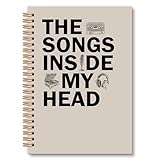
- Notebook Size: Measuring 6x8.2 inches, this notebook comes with a sturdy hardcover and smooth, premium pages. Perfect for everyday use and built to last
- Multifunctional Use: This notebook has a total of 82 sheets and 164 pages, whether it is used for school notes, work records, or as a personal diary, study notes or work journal, it can meet your diverse needs. Its exquisite design enhances the user experience and serves as stylish desk decor
- Decorative Notebook:This notebook features a distinctive design, making it a great addition to your desk decor. Whether it's the unique pattern or simple typography, this notebook isn't just a great writing tool—it's also a reflection of your personal style
- Spiral Bound Notebook:This journal notebook features a spiral design that allows it to open completely 180°flat for easy writing. It also folds seamlessly 360°without creasing. The pages are easy to tear and don't fall apart easily
- Perfect Gift Idea: These notebooks can be used not only for personal use but also as a thoughtful gift. The unique cover design of the notebooks is perfect for those who love to write. A thoughtful gift choice for students, teachers, writers, doctors, nurses, friends and more
How Do You Turn A Song Idea Into A Singable Hook?
- Write the song’s job in one sentence. State what changes emotionally, who is speaking, and what the listener should remember. For example: “A night-shift coder finally shuts the laptop and chooses sleep over one more fix.” Keep this as your brief, not a lyric to paste unchanged.
- Choose a concrete image and phrase. Pick one image from the situation—such as the cursor still blinking—and a short phrase that carries the turn, such as “let it wait till morning.” The example is a starting point; replace it with language that sounds like the character, not a slogan.
- Ask for hook candidates with constraints. In RHYMEBOOK, describe the theme and mood, specify that you want chorus-hook alternatives, and ask for compact lines with conversational wording. Request a few different approaches rather than a finished song. Its listed controls include genre, mood, theme, and song structure, but exact genre performance is not established, so inspect each candidate rather than assuming the label guarantees a style.
- Keep the phrase that survives speaking aloud. Read each candidate at normal conversational speed. Keep the one with clear word stress and a memorable image. If a rhyme makes the sentence sound unnatural, change the sentence instead of forcing the rhyme.
- Check syllables and stress. Count the syllables in the hook and mark the naturally stressed words. A line can have the right count and still sing awkwardly if an important word lands on a weak beat. Use RHYMEBOOK’s rhyme and syllable tools to explore alternatives, then judge the stress by speaking and singing the line yourself.
How Do You Shape A Melody Around The Hook?
- Record the rhythm before choosing notes. Speak or tap the hook in a few natural rhythms. Keep the version that gives the key phrase room to land and leaves a usable breath point. If the lyric resists every rhythm, shorten or rewrite it before adding melody.
- Capture a rough cadence and sketch. In SongIntent, capture the cadence and make a melody sketch for the selected phrase. Keep the first pass simple: try a mostly repeated contour, then a version with one clear lift or fall on the emotional word. These are composing choices, not claims about what the software will generate.
- Test the line against chords and playback. Move the lyric and melody idea into Song Cage or LandChords to hear it alongside chords. Sing the hook several times over the same progression. If the words blur, the phrase feels hard to repeat, or the melody pulls attention away from the central image, revise one element at a time.
- Make a second version, not a pile of variants. Change one feature—rhythm, melodic contour, or a single word—and compare it with the previous take. Save the stronger version and a voice memo so the intended phrasing is not lost.
How Do You Expand The Hook Into A Complete Draft?
- Give the verse a different task. Let the verse show the specific moment or detail that leads to the hook. Avoid repeating the hook’s conclusion before the chorus arrives.
- Ask for structured lyric options. Use RHYMEBOOK to explore verse and chorus material with the same theme and mood, while specifying what information belongs in each section. Treat suggestions as raw material and rewrite lines that do not fit the speaker or the story.
- Test the section transition. Put the verse and chorus into your songwriting workspace and sing through the transition. Check that the chorus feels like an arrival and that its first line can be understood on first hearing.
- Revise line by line. If a verse line feels crowded, trim syllables or simplify its syntax. If the hook feels weak, return to its central phrase and melody rather than adding more production detail.
- Keep a plain-text lyric copy. Save the current lyric and label the version with a date or revision number. This gives you a readable checkpoint while you change melody or arrangement.
What Should You Check Before Sharing Or Releasing It?
- Sing the hook without reading it. If the rhythm or key phrase disappears from memory immediately, simplify and test again.
- Check that the stressed syllables match the musical emphasis and that each line has a practical breath point.
- Listen for lines that sound generic, contain an unintended meaning, or no longer match the song’s point of view; rewrite them in your own voice.
- If you use another person’s voice, recording, or reference audio, get consent and check the relevant platform’s terms. The product details here do not establish licensing rights for generated material, voice use, samples, or commercial release, so check the vendor’s current terms before sharing or releasing a track.
Product prices and availability are accurate as of the date/time indicated and are subject to change. Any price and availability information displayed on Amazon at the time of purchase will apply.