The Geeks Club is reader-supported. When you buy through links on our site, we may earn an affiliate commission. As an Amazon Associate I earn from qualifying purchases. Learn more
Choose a business VPN for an agency by documenting users, devices, applications, locations and client obligations first, then verify identity controls, endpoint checks, segmentation, logging, support and protocol standards in writing. A managed software client usually fits a distributed team; a physical gateway such as the TP-Link Omada ER605 fits a fixed office or branch; a hybrid agency may need both. Paying makes sense when you need centralized policy, MFA, rapid offboarding, device compliance, private egress or an auditable support process rather than only encrypted Wi-Fi. The products below are listed alphabetically, not ranked, and each suits a different need. Use VPNs only for lawful work and follow every platform’s terms and applicable law.
At a glance
| Name | Best for | Key spec or role | Free plan / price | Checked |
|---|---|---|---|---|
| Bitdefender GravityZone Business Security | Endpoint protection alongside VPN access | Business endpoint security and policy management | Confirm current quote; no plan figure stated here | November 2026 |
| Cisco Secure Client | Agencies standardizing on an established enterprise client | Client-based remote access; verify licensing and gateways | Confirm current quote; no plan figure stated here | November 2026 |
| Cloudflare One | Identity-aware application access | Evaluate as a zero-trust access layer rather than a broad network tunnel | Confirm current quote; no plan figure stated here | November 2026 |
| OpenVPN Access Server | Teams wanting a self-managed VPN service | Deployable VPN server with agency-controlled administration | Confirm current quote; no plan figure stated here | November 2026 |
| StreamNeo | Creative teams delivering live media | Streaming workflow that still requires separate access controls | Confirm current quote; no plan figure stated here | November 2026 |
| Tailscale | Small distributed teams needing simple private connectivity | Identity-oriented mesh networking; validate policy and logging | Confirm current quote; no plan figure stated here | November 2026 |
| TP-Link Omada ER605 | Fixed offices and branch or site-to-site links | Centralized management, site-to-site and remote-access VPN, WAN failover | Confirm hardware and subscription terms; no price stated here | November 2026 |
Details checked November 2026.
How do I choose a business VPN for my agency?
Start with an inventory and threat model, not a server-count comparison. Write down who needs access, what they use, where they work and which client contracts constrain data handling. Then make MFA, standards-based protocols, least privilege, endpoint posture, revocation, logs, patching and support mandatory requirements. Pilot at least two candidates with representative users and applications before signing a long contract.
1. Build the requirements worksheet
- Users: employees, freelancers, contractors, clients, administrators, joiner/mover/leaver steps and emergency access.
- Devices: managed laptops, mobile devices, BYOD, operating systems, encryption, security software, device-management status and local-admin rights.
- Resources: SaaS, file shares, source control, production systems, client portals, printers and office subnets.
- Locations: homes, offices, travel countries, client sites and regions where latency matters.
- Data and contracts: confidentiality terms, residency, retention, audit rights and incident-notification deadlines.
- Topology: full or split tunnel, private gateway, site-to-site, per-application access or identity-aware publishing.
- Administration: directory or SSO integration, MFA, role separation, APIs, policy groups, inventory, log export and alerting.
Mark any client-mandated control as required rather than optional. A contractor who needs one portal should not receive a route to the entire agency network.
What should I look for in a business VPN?
Use zero trust as the baseline. NIST’s SP 800-207 rejects implicit trust based only on network location, so evaluate identity, device state, resource and context for every access decision.
Shopping ad
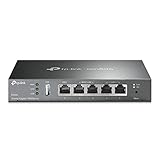
- 【Five Gigabit Ports】1 Gigabit WAN Port plus 2 Gigabit WAN/LAN Ports plus 2 Gigabit LAN Port. Up to 3 WAN ports optimize bandwidth usage through one device.
- 【One USB WAN Port】Mobile broadband via 4G/3G modem is supported for WAN backup by connecting to the USB port. For complete list of compatible 4G/3G modems, please visit TP-Link website.
- 【Abundant Security Features】Advanced firewall policies, DoS defense, IP/MAC/URL filtering, speed test and more security functions protect your network and data.
- 【Highly Secure VPN】Supports up to 20× LAN-to-LAN IPsec, 16× OpenVPN, 16× L2TP, and 16× PPTP VPN connections.
- Security - SPI Firewall, VPN Pass through, FTP/H.323/PPTP/SIP/IPsec ALG, DoS Defence, Ping of Death and Local Management. Standards and Protocols IEEE 802.3, 802.3u, 802.3ab, IEEE 802.3x, IEEE 802.1q
Identity and authentication
Require MFA for administrators and users wherever user-level access is offered. Check directory or SSO integration, role-based groups, emergency administrator procedures and whether one device can be revoked without disabling an entire account. Ask how quickly a departing contractor can be removed and whether administrators can restrict management interfaces to trusted networks.
Protocols and cryptography
Ask each vendor to identify every remote-access and site-to-site protocol, authentication method, cryptographic setting, update process and fallback behavior. The NSA and CISA guidance recommends standardized IKE/IPsec VPNs validated against standardized security requirements and warns buyers to scrutinize unclear proprietary protocols or non-standard fallback.
Least privilege and segmentation
Broad network access increases the blast radius of a stolen credential or compromised laptop. Prefer application gateways, per-user policy, separate client environments and endpoint checks when they can meet the workflow. CISA’s Modern Approaches to Network Access Security guide highlights the danger of third-party access without strict segmentation, least privilege and zero-trust controls.
Endpoint compliance and lifecycle
Ask whether access can depend on supported operating-system versions, patch state, disk encryption, security software or device-management status. Test a lost-device scenario, cached credentials, sleep and wake, network changes and removal of a contractor. The CISA TIC 3.0 Cloud Use Case recommends secure protocols, MFA, endpoint compliance checks, restrictions on authorized services, patching and resilient VPN entry points.
Logging and support
Determine whether logs include user, device, policy, destination and timestamp context; whether they export to your monitoring system; and how long they are retained. Request written vulnerability-disclosure, patching, customer-notification and escalation procedures. A polished dashboard alone is not evidence of a mature incident process.
Should we use a VPN router or an app?
Use a managed app for roaming employees and contractors, a gateway for a fixed office or branch, and both when routing and identity policies are clearly documented. A gateway can provide stable office egress and site-to-site connectivity; an app follows a user and device to home networks, hotels and client sites.
TP-Link says its Omada gateways support centralized management, site-to-site VPN, remote-access VPN and automatic WAN failover. If you consider the ER605, validate encrypted throughput, concurrent sessions, firmware support, administrator MFA and management exposure instead of treating a specification as a complete recommendation. Document DNS ownership, split-tunnel rules, failover, routing and which team may change each control. Avoid overlapping tunnels that make troubleshooting and incident response ambiguous.
The Tool Desk
Outbyte PC Repair FREERepair Windows errors before they cause bigger problemsFix Now →Outbyte Driver Updater FREEFix the driver behind crashes, sound loss and screen glitchesFind Drivers →Shopping ad

- 【Flexible Port Configuration】1 2.5Gigabit WAN Port + 1 2.5Gigabit WAN/LAN Ports + 4 Gigabit WAN/LAN Port + 1 Gigabit SFP WAN/LAN Port + 1 USB 2.0 Port (Supports USB storage and LTE backup with LTE dongle) provide high-bandwidth aggregation connectivity.
- 【High-Performace Network Capacity】Maximum number of concurrent sessions – 500,000. Maximum number of clients – 1000+.
- 【Cloud Access】Remote Cloud access and Omada app brings centralized cloud management of the whole network from different sites—all controlled from a single interface anywhere, anytime.
- 【Highly Secure VPN】Supports up to 100× LAN-to-LAN IPsec, 66× OpenVPN, 60× L2TP, and 60× PPTP VPN connections.
- 【5 Years Warranty】Backed by our 5-years warranty and free technical support from 6am to 6pm PST Monday to Fridays
Which VPN is best for a remote marketing team?
There is no universal best choice. A remote marketing team should prioritize reliable roaming recovery, SSO/MFA, contractor offboarding, application-level access, video-call quality and large-asset transfers. Match the shortlist below to the worksheet and confirm every important capability in a written quote or pilot.
1. Bitdefender GravityZone Business Security: who it is for
GravityZone Business Security is an endpoint-security product to evaluate alongside a VPN, not as a replacement for remote-access controls. It suits agencies that need centralized protection and policy for laptops and workstations before those devices reach client systems.
Free plan or trial: confirm current availability, duration and device limits with the vendor. Paid plans: obtain a current business quote with seat counts, renewal, support and data-retention terms. Upgrade when endpoint posture, malware protection and centralized remediation are contractual requirements; keep a separate VPN or zero-trust access layer for routing and authorization.
2. Cisco Secure Client: who it is for
Cisco Secure Client suits agencies whose clients already operate Cisco-based remote-access infrastructure or whose IT partner can manage enterprise gateways. Treat it as a client component in a broader design: verify the gateway edition, identity integration, device posture, split-tunnel policy and log export that your environment requires.
What’s actually slowing this PC down?
Pick the symptom - the matching free tool is one click away.
Free plan or trial: ask for an evaluation license and document user, device and time limits before deployment. Paid plans: request a quote that separates client licensing, gateway requirements, support and renewal. Upgrade when centralized policy and compatibility with client-controlled infrastructure outweigh the administrative overhead of an enterprise stack.
3. Cloudflare One: who it is for
Cloudflare One is worth evaluating when an agency wants identity-aware access to specific applications instead of placing every user on a broad network segment. It can be a fit for distributed teams with SaaS, source-control and internal web applications, provided the agency maps DNS, identity, device posture, logging and application dependencies first.
Free plan or trial: confirm which features, users and policies are included and whether a trial converts automatically. Paid plans: obtain pricing for users, applications, private connectivity, support and log retention. Upgrade when per-application controls and centralized identity policy reduce the need for full-tunnel network access.
Shopping ad

- 【Flexible Port Configuration】1 Gigabit SFP WAN Port + 1 Gigabit WAN Port + 2 Gigabit WAN/LAN Ports plus1 Gigabit LAN Port. Up to four WAN ports optimize bandwidth usage through one device.
- 【Increased Network Capacity】Maximum number of associated client devices – 150,000. Maximum number of clients – Up to 700.
- 【Integrated into Omada SDN】Omada’s Software Defined Networking (SDN) platform integrates network devices including gateways, access points & switches with multiple control options offered – Omada Hardware controller, Omada Software Controller or Omada cloud-based controller(Contact TP-Link for Cloud-Based Controller Plan Details). Standalone mode also applies.
- 【Cloud Access】Remote Cloud access and Omada app brings centralized cloud management of the whole network from different sites—all controlled from a single interface anywhere, anytime.
- 【SDN Compatibility】For SDN usage, make sure your devices/controllers are either equipped with or can be upgraded to SDN version. SDN controllers work only with SDN Gateways, Access Points & Switches. Non-SDN controllers work only with non-SDN APs. For devices that are compatible with SDN firmware, please visit TP-Link website.
4. OpenVPN Access Server: who it is for
OpenVPN Access Server fits agencies that want a VPN service they can deploy and administer themselves. It is appropriate only when the agency can own patching, key management, gateway hardening, backups, monitoring and incident response rather than assuming the software removes those duties.
Free plan or trial: verify the current concurrent-connection allowance and evaluation terms. Paid plans: request a quote based on concurrent connections, support and renewal. Upgrade when predictable self-managed connectivity is more important than a fully hosted control plane; budget administrator time as part of the total cost.
5. StreamNeo: who it is for
StreamNeo is a live-streaming service that may matter to a creative agency delivering media, but it is not a substitute for a business VPN. Use it as an application in the requirements worksheet: test upload stability, regional latency, account roles and whether production credentials remain protected by separate identity and endpoint controls.
Free plan or trial: confirm current stream, storage and account limits. Paid plans: request a current service quote and clarify overage, retention, support and cancellation terms. Upgrade when live delivery requirements justify the service, while keeping VPN access narrowly scoped to the production systems and people who need it.
6. Tailscale: who it is for
Tailscale suits small, distributed teams seeking private connectivity organized around user and device identity rather than a single office gateway. Validate its access rules, administrator roles, device removal, subnet routing, audit records, exit-node policy and compatibility with client obligations before treating it as the agency’s primary control.
Do these 3 things before closing this tab:
1Clear out junk files and repair common Windows errors2Fix the driver behind crashes, sound loss and screen glitches3Repair Windows errors before they cause bigger problemsFree plan or trial: confirm current user, device and feature limits. Paid plans: obtain a quote that states user minimums, device limits, support and log retention. Upgrade when identity-centered connectivity and simple onboarding reduce operational effort without granting unnecessary network reach.
7. TP-Link Omada ER605: who it is for
The ER605 is a concrete hardware candidate for a fixed office, branch or site-to-site link. It is less convenient as the sole control for a mobile workforce because roaming users still need managed clients or another access layer. Validate encrypted throughput under your real load, concurrent sessions, firmware lifecycle, administrator MFA and exposure of the management plane.
Shopping ad

- Support 4G+ Cat6: Insert a Nano SIM card to enjoy up to 300 Mbps (Not compatible with AT&T's Text & Data plans in the US)
- AX3000 Dual-Band WiFi 6: Supports 2402 Mbps on 5 GHz and 574 Mbps on 2.4 GHz
- 6 Gigabit Ethernet Ports: Provide high-speed wired connectivity
- 5 High-Gain Detachable Antennas: Extend and concentrate the Wi-Fi signals
- Omada Mesh: Seamlessly connects to EAPs that support mesh technology
Free plan or trial: hardware has no conventional free tier; confirm any controller or support terms before purchase. Paid plans: record hardware cost, controller requirements, support, replacement and renewal terms in the quote. Upgrade or add a gateway when a stable office egress, WAN failover or branch tunnel is more valuable than app-only access.
How do we test VPN speed and reliability?
Run a representative pilot rather than relying on a benchmark. Select a designer moving large files, an account lead on video calls, a developer using source control, a contractor on BYOD and an administrator performing onboarding and offboarding. Test from the office, home, a mobile hotspot and at least one client-region location.
Outdated Drivers Are Slowing You Down
One free scan finds every outdated or missing driver and matches the right update for your exact hardware.Free scan · exact hardware matchWindows Errors? Fix Them Before They Spread
Repair common Windows errors and clear accumulated junk for a smoother, more stable PC - no reinstall needed.Free scan · no reinstall- Capture baseline latency, upload and download throughput without the VPN.
- Repeat the same work with the VPN, recording median and worst-case latency, throughput, reconnect time, DNS behavior, split-tunnel routing, call quality, battery draw, crashes and help-desk effort.
- Put devices to sleep, change networks, disable a tunnel and restore service.
- Revoke a user and a device, change a policy, remove a contractor and inspect the audit trail.
- Verify that only authorized services cross the tunnel and that segmentation blocks unnecessary lateral movement.
A product that is fast but difficult to revoke or investigate is a poor agency fit. CISA recommends limiting authorized users and services traversing VPNs and considering segmentation, application gateways or virtual desktop infrastructure.
Independent reader supportYour contribution helps us test, update, and keep practical guides available for everyone.Can a VPN protect client data?
A VPN encrypts traffic across its tunnel, but it does not make a compromised endpoint safe, replace SaaS authorization, guarantee anonymity or automatically satisfy a contract. Split tunneling can send selected traffic outside the tunnel, and DNS, browser, application and endpoint logs can still reveal activity. Clarify what the provider logs, who can access it, retention and deletion on exit.
Maintain a patch owner, administrator MFA, restricted management exposure, segmentation and an incident-response procedure. Include rollback, training and a quarterly review in the rollout plan. Keep the requirements worksheet, vendor answers, pilot measurements and decision rationale so the choice can be defended during a client audit.
What should be in the final purchase checklist?
- Operations and security approve the inventory and threat model.
- MFA, protocol, endpoint, revocation, segmentation, logging, patching and support controls are verified in writing.
- At least two candidates complete a pilot with representative users, devices, applications and locations.
- Failure, offboarding, lost-device and audit-log tests are complete.
- Residency, retention, support, renewal, overage and export terms are recorded.
- The rollout has staged deployment, rollback, training and quarterly control review.
Frequently Asked Questions
Do agencies need a full-tunnel VPN for every employee?
No. Full tunneling is useful for defined inspection or routing requirements, while application-level or split-tunnel access can reduce latency and limit exposure. Decide per role and resource, then document which traffic is intentionally outside the tunnel.
Recommended Free Tools
How quickly should a departing contractor lose VPN access?
Access should be removed as part of the agency’s normal leaver workflow, with an emergency revocation path that does not depend on vendor support. Also revoke registered devices, tokens, certificates and cached credentials where the product permits.
Shopping ad

- 【Flexible Port Configuration】1 10G SFP+ WAN/LAN Port + 1 10G SFP+ WAN Port + 1 Gigabit SFP WAN/LAN Port + 8 Gigabit RJ45 WAN/LAN Port + 2 USB 3.0 Ports (One Support LTE backup). Up to 10 WAN ports w/ load balance optimize bandwidth usage & utilization rate through one device.
- 【High-Performace Network Capacity】Maximum number of concurrent sessions – 2,300,000. Maximum number of clients – 1000+.
- 【Support Omada SDN】Omada’s Software Defined Networking (SDN) platform integrates network devices including gateways, access points & switches with multiple control options offered – Omada Hardware controller, Omada Software Controller or Omada Cloud-based controller*(Contact TP-Link for Cloud-based controller plan details). Standalone mode also applies.
- 【Cloud Access】Remote cloud access and Omada app brings centralized cloud management of the whole network from different sites—all controlled from a single interface anywhere, anytime.
- 【Abundant Security Features】Powerful firewall policies, DoS defense, IP/MAC/URL filtering, IP-MAC binding, One-Click ALG activation, speed test and more security functions protect your network and data.
What VPN logs should an agency retain?
Retain the minimum needed for security investigations and client obligations: identity, device, policy decision, destination and time context. Define access rights, retention period, export format and deletion procedure before enabling collection.
Is a VPN enough for a client’s compliance audit?
Usually not. Auditors may also expect endpoint protection, identity governance, segmentation, patch management, incident response and evidence that access is limited to authorized services. Map each contract clause to a control and retain the verification record.
When should an agency replace a VPN with zero-trust application access?
Consider application access when users need a small set of web or private services and broad network routing creates unnecessary risk. Keep a VPN or gateway where legacy protocols, office subnets or site-to-site connectivity genuinely require network-level access.
Frequently Asked Questions
Do agencies need a full-tunnel VPN for every employee?
No. Full tunneling is useful for defined inspection or routing requirements, while application-level or split-tunnel access can reduce latency and limit exposure. Decide per role and resource, then document which traffic is intentionally outside the tunnel.
How quickly should a departing contractor lose VPN access?
Access should be removed as part of the agency’s normal leaver workflow, with an emergency revocation path that does not depend on vendor support. Also revoke registered devices, tokens, certificates and cached credentials where the product permits.
What VPN logs should an agency retain?
Retain the minimum needed for security investigations and client obligations: identity, device, policy decision, destination and time context. Define access rights, retention period, export format and deletion procedure before enabling collection.
Is a VPN enough for a client’s compliance audit?
Usually not. Auditors may also expect endpoint protection, identity governance, segmentation, patch management, incident response and evidence that access is limited to authorized services. Map each contract clause to a control and retain the verification record.
Free tools Windows power users keep installed
One-click scans. No signup required.
When should an agency replace a VPN with zero-trust application access?
Consider application access when users need a small set of web or private services and broad network routing creates unnecessary risk. Keep a VPN or gateway where legacy protocols, office subnets or site-to-site connectivity genuinely require network-level access.
Quick Recap
Product prices and availability are accurate as of the date/time indicated and are subject to change. Any price and availability information displayed on Amazon at the time of purchase will apply.

