Do these 3 things before closing this tab:
1Scan for outdated or missing drivers - takes under a minute2Clear out junk files and repair common Windows errors3Fix the driver behind crashes, sound loss and screen glitchesThe Geeks Club is reader-supported. When you buy through links on our site, we may earn an affiliate commission. As an Amazon Associate I earn from qualifying purchases. Learn more
Choosing an AI music generator for a game is primarily a rights and production decision, not a demo-quality contest. Start by confirming that the plan permits commercial game distribution, then verify that it can deliver editable material—loops, stems, WAV files or layers—and that its controls, export workflow and pricing fit your engine and team. Free access can be useful for prototypes, but it may restrict monetization, downloads, attribution or post-cancellation use. Paid access makes sense when it grants the rights and export control required for a shippable build.
The products below are listed alphabetically, not ranked. Use the comparison and workflow to match a tool to your project’s scope, budget and integration needs.
At a glance
| Name | Best for | Key spec | Free plan / price | Checked |
|---|---|---|---|---|
| AIVA | Teams that need clearly separated licensing tiers | Plan-specific ownership and monetization terms | Check current plans; rights differ by tier | November 2026 |
| Beatoven.ai | Creator-led cue generation and downloads | Generation with licensing information for downloaded tracks | Check current plans and download limits | November 2026 |
| Soundraw | Designers making several mood and length variants | Mood, genre and length controls | Check current licensing plan and export limits | November 2026 |
| Suno | Fast prompt-based ideation and song drafts | Prompt generation with downloadable outputs | Confirm which tier grants commercial game use | November 2026 |
| Udio | Teams evaluating another consumer-oriented generator | Terms and account limits can change quickly | Verify current commercial-use terms before production | November 2026 |
Details checked November 2026.
Plan quotas, credits, model names and prices are volatile. Open each vendor’s current terms before committing, and archive the wording that applied when you generated the cue.
What should game developers evaluate first?
Evaluate commercial rights before musical style. A usable track must be legal to ship, technically editable and reproducible by the team that maintains the game.
Shopping ad

- Dynamic, closed ear headphones with up to 32 dB attenuation of outside sound
- Lightweight and comfortable, ergonomic design, Cord Length 3.3 9.8 feet Coiled
- Extended frequency response and warm, natural sound reproduction
- Around the ear design with padded earcups
- Earpads, headband padding, and audio cord are easily replaceable, ensuring long life
- Commercial permission. Check whether the selected tier covers commercial game distribution, trailers, soundtrack albums, client work and user-generated-content platforms. Look for attribution rules, territorial limits, rights after cancellation, takedown procedures and any warranty or indemnity language. AIVA publishes distinctions between plan rights, and Soundraw publishes licensing conditions; read the exact terms rather than relying on a marketing summary (AIVA licensing information; Soundraw licensing information).
- Deliverables. A finished stereo song may suit a menu or trailer but not interactive play. Ask whether exports include WAV, separate stems, MIDI, alternate mixes, loop points or only an in-platform stream. Confirm sample rate, bit depth, duration limits and whether downloads remain available if a subscription ends.
- Control. Compare controls for mood, genre, tempo, key, instrumentation, vocal or instrumental mode, duration and variation count. Section regeneration and consistent variants can save more editing time than a larger model catalog.
- Consistency and editability. Generate multiple cues from one fixed brief. Score loop seams, motif continuity, arrangement, loudness, unwanted vocals, repetition, transitions and artifacts. Keep rejected outputs and prompts in a decision log so the team can explain why a plan produced enough accepted cues.
- Integration. Download one representative cue and import it into the target engine before paying annually. Confirm metadata, project sharing, revision history, storage, API or batch access and compatibility with the team’s DAW. Unity’s audio manual covers asset import and configuration, while FMOD documents event-based and adaptive music authoring (Unity audio documentation; FMOD documentation).
- Total cost. Include rights upgrades, DAW or mastering software, storage, middleware, contractor editing, QA and engineering time. Compare cost per accepted minute or shipped cue—not cost per generated minute.
Which AI music generators should a game developer consider?
Each section describes a different fit. None should be approved for a commercial build until its current terms and exports have been checked for the exact use case.
1. AIVA: who it is for
AIVA suits teams that want licensing distinctions made explicit at the plan level and need to evaluate ownership, monetization, attribution, territory and soundtrack-release rights as procurement requirements. Its published information separates plan rights, so the plan selected at creation can affect how a cue may be used.
Free access and limits: Confirm the current free option, export allowance and whether free-tier creations are restricted to personal or non-commercial use. Do not assume that upgrading later changes the rights attached to an earlier free-tier file.
Paid access and upgrade case: Review the paid tier whose license covers your game, trailers, client deliverables and any soundtrack release. Upgrade when the project needs commercial permissions, clearer ownership or monetization rights, and retain an invoice and copy of the terms.
Production checks: Ask whether the export is a full mix or includes stems and loop-ready files. Test a short gameplay cue and document the plan and model information used for every accepted asset.
2. Beatoven.ai: who it is for
Beatoven.ai is aimed at creator-focused generation, downloads and licensing. It can be a practical candidate for developers who want to draft exploration, menu or trailer cues and then finish them in a DAW.
Free access and limits: Check the current trial or free allowance, generation credits, download rules and whether downloaded files carry commercial restrictions. A preview that cannot legally ship is useful for ideation only.
Quick wins for a faster PC:
Repair Windows errors before they cause bigger problemsFix Now →Fix the driver behind crashes, sound loss and screen glitchesFind Drivers →Shopping ad

- Closed back, over-ear design
- Extended comfort for recording or private listening sessions
- 50mm neodymium drivers deliver clear audio with powerful bass.
- 15Hz-25kHz frequency range represents the entire frequency range.
- 32-ohm impedance works with all types of audio devices (audio interfaces, phones, laptops, video game controllers, etc.)
Paid access and upgrade case: Choose a paid license only after confirming that it covers a game build, trailer, soundtrack release, client delivery and a platform where players can create or share content. Upgrade when those permissions and downloadable masters are required.
Production checks: Verify file format, duration, loopability and retention after cancellation. Keep the license record with the project’s source files.
3. Soundraw: who it is for
Soundraw is suited to designers who need several variants of a gameplay state. Its interface highlights mood, genre and length controls, which can help produce alternate-intensity or differently timed versions from a common brief (Soundraw).
Free access and limits: Confirm whether browsing or generation is available without payment, how previews differ from downloadable files and which uses are permitted on the no-cost tier. Check credit, duration and export caps before planning a sprint around it.
The Tool Desk
Outbyte PC Repair FREEClear out junk files and repair common Windows errorsFree Scan →Outbyte Driver Updater FREEFix the driver behind crashes, sound loss and screen glitchesFind Drivers →Paid access and upgrade case: Read the current license for commercial game distribution, client projects, perpetual use after cancellation, distribution restrictions and any stem requirements. Upgrade when your team needs downloadable masters or repeated variants under a commercial license.
Production checks: Test whether mood, genre and length controls produce consistent transitions and loop points, and whether exports include stems or only a stereo mix. Import a cue into the engine and middleware before an annual commitment.
4. Suno: who it is for
Suno is designed around prompt-based music generation and downloadable outputs (Suno). It can accelerate ideation when a designer needs several stylistic directions quickly, especially for instrumental sketches or trailer concepts.
Shopping ad
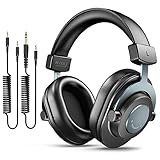
- [WELL-BALANCED SOUND] Large 50mm unit drivers featured on the wired headphones deliver dynamic bass, stable mids and accurate treble. Worked with 20Hz~20kHz frequency range, the FIFINE studio headphones is ideal for music lovers that presents brilliant experience enjoyment in DJ, mixing, monitoring or listening to music, and allows you to better understand your own voice when recording monitoring.
- [COMFORTABLE MATERIAL] Comfortable wearing position is provided by the supportive adjustable headband and soft padded ear cushions when creativity is ramping out for creation marathon or while podcast or voiceover. Weight of 265g, the over ear headphones, audio monitors, can reduce your feeling about heavy. Your ears and head still feel soft and satisfied, even when long session work with the mixing headphones.
- [PASSIVE NOISE-CANCELING] The circumaural closed-back studio headphones for recording design provides decent isolation, which blocks high-frequency noise signal from the environment. This wired monitor headphone helps create an immersive working zone, letting anyone focus on their sound or simply relax during the busy holidays. The ergonomic design corded headphones would be right fits for your ears, so you will not feel oppressed or sound leakage and have a better master over your sound.
- [EXTENSIVE COMPATIBILITY] The studio headphones wired expand the efficiency of your devices. Two 9.8ft detachable DJ-style coiled cables with 3.5mm and 1/4’’ audio plug ensure a wide-ranged of connection with mixer, audio interface, mic and Xbox with headphones jack. No extra adaptor is required for the over-ear headphones wired when switching different devices for a improving monitoring productivity.
- [USER- FRIENDLY ADJUSTABILITY] This FIFINE DJ headphone have a balanced designed for flexibility and durability. The headband can be easily adjusted to a comfortable position to prevent the PC headphones from loosening during intense sessions, without break-in period for comfy feeling.
Free access and limits: Verify the current free-tier generation quota, download availability and the ownership and commercial-use treatment of content created before an upgrade. A later subscription should not be presumed to retroactively grant broader rights.
PC Slower Than It Used to Be?
A free scan shows the junk files, broken settings and background clutter dragging Windows down - then fixes them in one click.Free scan · Windows 10 & 11Crashes, No Sound, or Screen Glitches?
Random freezes, missing sound and display glitches usually trace back to one bad driver. Find and replace yours safely.Free scan · under a minutePaid access and upgrade case: Select a tier only when its terms explicitly permit commercial game use and cover your distribution model. Upgrade when you need larger generation allowances, downloadable files and documented commercial rights.
Production checks: Run instrumental prompts against a fixed brief and score repeated motifs, duration, section editing, unwanted vocals and loop seams. Preserve prompt text, creation date and plan for each cue that survives editing.
5. Udio: who it is for
Udio can be included in an evaluation when a team wants another consumer-facing generator in its comparison set. Its account limits and terms may change quickly, so it requires especially careful procurement review.
Free access and limits: Check the live account allowance, download rules, attribution requirements and whether free-tier outputs may be distributed in a commercial game. Treat a consumer plan as non-commercial until the current terms say otherwise.
Paid access and upgrade case: Ask the vendor for written clarification when “commercial use” does not explicitly mention games, trailers, soundtrack releases or client work. Upgrade only after confirming export retention and rights for the territory in which the game will be sold.
Production checks: Record the model or version, terms date and account tier for every shipped cue because service behavior and limits can change.
Shopping ad

- 【Superior Sound Quality】 Equipped with precision-tuned 40mm Neodymium drivers, these closed-back headphones deliver deep, punchy bass, clear highs, and well-defined vocals. You'll experience a natural, well-balanced sound with minimal distortion.
- 【Everyday Versatility with Professional Sound】The 32Ω impedance strikes the perfect balance between studio-grade audio and on-the-go use. Whether you’re plugged into your smartphone, laptop, or tablet, these headphones deliver powerful and crystal-clear sound.
- 【Comfort That Lasts】The HD660PRO features an upgraded leather headband and ultra-soft velvet ear pads, giving you a comfortable fit that lasts, whether you're enjoying music or working long hours, the over-ear fit ensures minimal fatigue even during marathon sessions.
- 【Built for Durability and Flexibility】Crafted with durability in mind, the adjustable headband and swivel ear cups offer a secure, customizable fit—perfect for long mixing sessions. Built from rugged materials, these podcast headphones are designed to withstand daily wear in both professional and casual settings.
- 【Seamless Connectivity for Any Setup】Equipped with a 3.5mm plug and a 6.3mm adapter, these headphones easily connect to a wide range of audio gear—from mixers and guitars to mobile devices. Featuring a durable 8.2 ft straight cable, these studio headphones deliver reliable performance whether you're in the studio, DJing, or podcasting.
How do I make AI music react to gameplay?
Generate short, compatible layers and implement them as adaptive events rather than placing one long file under the entire game. Menus and trailers can use linear cues; gameplay usually benefits from loop points, alternate intensity layers, stems, stingers and transitions.
- Write a one-page brief. Define the gameplay state, emotional arc, tempo range, key, instrumentation, loop length, intensity layers, age rating and reference adjectives.
- Run a controlled comparison. Send the same brief to two or three candidates. Save prompts, model or version information, dates and outputs for reproducibility.
- Reject unusable candidates early. Remove outputs with unclear rights, unstable structure, audible artifacts, unsuitable vocals or no practical export path.
- Generate a batch. Score loopability, motif consistency, arrangement and mix quality. Record accepted-cue yield instead of counting every generated minute.
- Edit in a DAW. Trim starts and ends, repair transitions, set loop points, normalize loudness, remove unwanted elements and render stems or layers where possible.
- Implement states and transitions. Import assets into Unity or another engine, then author events and adaptive logic in FMOD or the engine’s audio system. Set exploration, combat, pause, loading and failure states explicitly.
- Profile performance. Check memory, streaming, decode cost, compression and behavior during scene changes on the target hardware.
- Run legal and platform checks. Confirm commercial rights, attribution, content policy, territorial distribution, soundtrack release permission and takedown handling. Archive invoices and terms.
- Re-test after updates. Record the vendor plan and model version for each shipped cue, and reassess rights or export behavior after major service changes.
Can I ship music made on a free plan?
Sometimes, but only when the free tier’s written license expressly allows your game use. Many services separate personal, non-commercial and commercial permissions; generation access alone is not a distribution license.
Before shipping, verify the exact file’s creation tier, commercial-game permission, attribution, territory, client and soundtrack rights, post-cancellation status and any restrictions on resale or user-generated content. Keep a dated copy of the terms and your payment record. If the wording is ambiguous, obtain written clarification or replace the cue.
Will an AI music generator train on copyrighted songs?
Training-data practices and copyright clearance are jurisdiction-specific, and a product page may not answer every legal question. Ask how the service describes its training sources, provenance disclosures, opt-out process and complaint or takedown procedure, then have counsel assess the risk for your release territories.
Regardless of training claims, human review remains necessary for originality, recognizable melodic similarity, accessibility, content policy and platform compliance. Keep prompts, source files, edits and approvals so your studio can document how each cue was made.
Independent reader supportYour contribution helps us test, update, and keep practical guides available for everyone.What costs do developers overlook?
Subscription price is only one line in the budget. Add commercial-rights upgrades, generation overages, DAW and mastering tools, storage, middleware, contractor editing, implementation, QA, localization of music states and the engineering time needed to replace rejected cues.
Annual billing can reduce the apparent monthly rate but increases commitment; monthly plans can cost more over a long production. Check whether credits expire, roll over, or are shared per user. Estimate cost per accepted cue after editing and integration, then compare that figure with commissioning or licensing alternatives.
Shopping ad

- 250-ohm studio impedance: designed for audio interfaces and headphone amps - it needs one for full volume; not ideal straight from a phone.
- The mixing reference: the open-back sound studios have trusted for decades, for honest mixes that translate everywhere.
- Open-back design: wide, natural stereo image so you hear placement and depth while mixing and mastering.
- Velour ear pads: soft, replaceable grey velour and a spring-steel headband stay comfortable through long sessions.
- In the box: DT 990 Pro with fixed 3m coiled cable and 1/4-inch adapter. Made in Germany. Pair it with a headphone amp or interface.
How should a small team choose?
- Prototype or game jam: prioritize speed, low commitment and exports that are easy to replace. Do not publish a commercial build until rights are confirmed.
- Indie production: weight commercial licensing, loopability, instrumental control, predictable exports and the ability to make several intensity variants.
- Client or contract work: require written permission for client deliverables, transfer of rights and continued use after cancellation.
- Console or live-service title: weight indemnity language, auditability, support, stems, revision history, model/version records and predictable access to old downloads.
Use a weighted matrix with commercial rights and indemnity language; ownership and attribution; mood, genre, tempo, key and duration controls; stems, WAV quality and loop points; consistency; vocals; API or batch access; team collaboration; moderation and provenance disclosures; plan limits and overage; support; export retention; and Unity, Unreal or FMOD integration. Assign higher weights to rights and auditability as the commercial and regulatory stakes rise.
How do I monitor generated music before release?
Use closed-back studio headphones while editing and profiling. They help reveal clipping, noise, loop seams, harsh high frequencies, masking between layers and balance problems that small speakers can hide. Monitor at a consistent level, then verify on consumer headphones, laptop speakers and the target platform’s typical playback setup.
Render the final mix and each interactive layer, check loudness and headroom, and listen through every transition in context. Human review is still required for musical quality and accessibility; a generator’s confidence or download count is not a quality guarantee.
Recommended Free Tools
Decision checklist
- Does the selected plan explicitly permit commercial game distribution?
- Are client work, trailers, soundtrack releases and user-generated content covered?
- Do you retain rights after cancellation, and is attribution required?
- Can the service export WAV, stems, MIDI or loop-ready files?
- Can it produce consistent variants for exploration, combat and failure states?
- Are credits, overages, rollover, storage and per-user charges clear?
- Can the team archive prompts, versions, invoices and terms?
- Has one representative cue been imported and profiled in the target engine or FMOD?
- Has legal and platform review approved every shipped file?
Frequently Asked Questions
Frequently Asked Questions
Can AI-generated music be used in a game made for a client?
Only if the license covers client deliverables or allows a valid transfer of rights. Put the client, territory, distribution channels and post-cancellation use in the contract, and retain the vendor’s terms as evidence.
Should I generate one long soundtrack or many short cues?
Use long linear cues for menus, credits and trailers when appropriate. Interactive play is usually easier to control with short loopable layers, stingers and alternate-intensity sections that the engine can transition between.
What file format should I request from an AI music service?
Ask for uncompressed WAV at the sample rate your audio pipeline expects, plus separate stems or layers when available. MIDI can help with later arrangement changes, but many services provide only a stereo mix, so confirm before designing around stems.
How can I document the provenance of a shipped cue?
Store the prompt, model or version, creation date, account tier, downloaded file, edits, approval notes, invoice and a dated copy of the license terms. Link that record to the cue name in your source-control or asset-management system.
What’s actually slowing this PC down?
Pick the symptom - the matching free tool is one click away.
Quick Recap
Product prices and availability are accurate as of the date/time indicated and are subject to change. Any price and availability information displayed on Amazon at the time of purchase will apply.

