Free tools Windows power users keep installed
One-click scans. No signup required.
The Geeks Club is reader-supported. When you buy through links on our site, we may earn an affiliate commission. As an Amazon Associate I earn from qualifying purchases. Learn more
To convert WMA to WAV, use FFmpeg with ffmpeg -i input.wma output.wav, or use VLC’s graphical Convert/Save workflow. Both create a WAV file from the audio in the WMA; neither restores sound detail that was lost when the original was compressed.
WMA files contain audio compressed with the WMA codec in an ASF-based format, while WAV output is uncompressed PCM. The result can be much larger than the source, but it is useful when an editor, sampler, archive workflow, or other application requires PCM/WAV. Keep the original until you have checked the new file.
General shopping ads
Method comparison
| Method | Best for | How it works | Useful distinction |
|---|---|---|---|
| FFmpeg | Repeatable conversions and precise output control | Run a command in a terminal or command prompt | Can be scripted; supports explicit PCM codec choices |
| VLC | A graphical, step-by-step conversion | Use Media → Convert/Save and choose a WAV/PCM profile | No command line; profile names vary between builds |
| Audacity | Conversion followed by editing, trimming, or cleanup | Open or export using the optional FFmpeg library | Requires FFmpeg support for WMA version 2 |
What happens when you convert WMA to WAV?
Conversion decodes compressed WMA audio and writes the decoded signal as uncompressed PCM in a WAV container. Microsoft describes WMA files as ASF files containing audio compressed with the WMA codec; Audacity describes WMA version 2 as a lossy, compressed format. WAV is not a way to reverse that compression: details discarded when the WMA was encoded cannot be reconstructed by converting it.
The practical trade-off is compatibility and editing convenience versus file size. An application that requires PCM/WAV may accept the converted file even if it cannot work with the original WMA. Because WAV stores uncompressed audio, the output may take considerably more disk space than the compressed source. The conversion changes the file representation, not the quality of the information that survived in the WMA.
Shopping ad
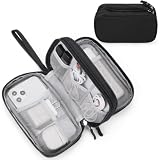
- Dimensions: 7.5" x 4.3" x 2.2". Compact size and lightweight make it easy to carry and put into your backpack, handbags or laptop bag without taking much space. Suitable for family use and daily organization. Note: Small mesh pockets are ideal for charging cords no longer than 3ft; longer cables (over 3ft) fit better in the larger compartments
- Quality Material: This electronic organizer travel case made of high quality durable waterproof oxford and soft sponge inside to secure your gadgets in place and deliver a quick access whenever you want. Water-resistant fabric protects your gear from unexpected splashes, keeping all your electronic essentials safe and secure
- Double Layers Design: This tech pouch features a double-layer interior design with 8 compartments, including multiple see-through mesh pockets and ample space to store your cords, cables, USB drives, cellphone, charger, mouse, flash drive and more, keeping all accessories neatly organized and tangle-free
- Practical and Convenient: Comes with a comfortable hand strap for easy carrying; You may carry it in your hand when heading out. Durable and smooth zipper closure keeps your favorite device securely, convenient for you to have quick access to the items inside the case
- Portable and Lightweight: The small size and lightweight design durable cable organizer pouch is a perfect choice when going on holiday, business trip, travel, office. Enjoy hassle-free travel without wasting time on tangled accessories. Great gift for yourself also a nice share with families and friends. (No include cords, electronic accessories)
Think of the process as decoding and repackaging rather than enhancement. The WAV contains samples produced by decoding the WMA stream. It can be a better interchange format for software that expects PCM, and it can avoid another application having to decode WMA, but it is still derived from the already-compressed source. Saving the WAV again will not recreate an original studio recording that was never present in the WMA.
Why does the WAV get bigger?
WMA uses compression to store audio in fewer bytes. PCM WAV writes the decoded samples directly, together with the information needed to describe the stream. Consequently, a WAV that plays for the same duration can be far larger than its WMA input. That size increase is normal and is not proof that the conversion added quality or that something went wrong.
Plan storage before converting a collection, especially when retaining both versions. If disk space is limited, convert and verify files in manageable groups rather than deleting the source immediately. For archival work, keeping the original WMA and a verified WAV can preserve both the source and the practical compatibility copy.
Quick wins for a faster PC:
Repair Windows errors before they cause bigger problemsFix Now →Scan for outdated or missing drivers - takes under a minuteDriver Scan →Before you start
Make a working copy or note the original location of each WMA file. Use a destination folder with enough free space for uncompressed output, and decide whether the WAV must meet a particular bit-depth, channel, or sample-rate requirement. If no outside specification applies, the simple FFmpeg command is usually adequate for an ordinary consumer WMA.
Check the filename and extension carefully. A file named recording.wma may contain WMA version 1 or 2; FFmpeg’s decoder documentation covers both versions. If a file was downloaded, copied from removable media, or renamed by another application, first make sure it opens and plays in a trusted player. A damaged or incomplete source cannot be made reliable merely by changing containers.
Use local software when the recording is private, confidential, or subject to retention rules. FFmpeg, VLC, and Audacity process files on the computer rather than requiring an upload to an online converter. Local processing also makes it easier to preserve the original and document exactly which settings were used.
1. FFmpeg: best for repeatable or parameter-controlled conversion
FFmpeg is the most direct choice when a command line is acceptable, when you need a repeatable process, or when you want to specify a PCM output codec. Archivematica documents this WMA-to-WAV command:
What’s actually slowing this PC down?
Pick the symptom - the matching free tool is one click away.
ffmpeg -i input.wma output.wavReplace input.wma with the source filename and output.wav with the destination filename. The FFmpeg decoder reference documents support for Microsoft WMA versions 1 and 2.
Shopping ad

- 【UPGRADED LAPTOP CLEANING KIT 】 The macbook cleaning kit computer screen cleaner comes with a number of accessories including a retractable large brush, polishing cleaning cloth X 2, keycap puller, metal pen tip, flocking sponge, thin soft brush, soft plastic lens cleaning pen, 5 replacing cloth, large cleaning microfiber cloth. You deserve the comprehensive computer cleaning kit keyboard vacuum at a low cost
- 【PROFESSIONAL KEYBOARD CLEANING KIT】 The laptop screen cleaner keyboard cleaner can pull out the keycaps of gaming keyboards and mechanical keyboards. A retractable keyboard brush works on laptops and keyboards, while the mini high-density brush is great for deep cleaning between keys for cleaning between flatter keys on a laptop, the metal pin tip gently removes any stains. This electronic cleaning kit macbook cleaner totally meets professional cleaning needs
- 【OFFICE DESK ACCESSORIES】This keyboard cleaner kit is easy to use and can clean your keyboard and electronic screen with just one swipe. Wiping with the 2mm thicken widen polishing cleaning cloth designed at a right angle for better fitting screen corners of computers with our recyclable cleaning spray, The laptop cleaner kit for macbook effectively absorbs stubborn stains, leaves no discoloration, no streaks, and no fiber shedding on the screens
- 【MULTIFUNCTIONAL TOOLS 】Mini soft brush and soft plastic lens cleaning pen are specially designed for DSLR camera screen, lens, and other delicate surfaces. 5 more cleaning cloths of it supplied for replacement. The flocking sponge is an excellent tool for cleaning earbuds charging cases, And the earbud cleaning kit is ideal. This electronics for college students is equivalent to 10 other electronic cleaning kit
- 【PORTABLE DESIGN & CLEANER TOOL】 The office supplies is compact in design, easy to carry, and you can easily take it anywhere. It's convenient to keep one in a drawer, one in your car, or in your bag and dorm. It is easy to use and can clean your keyboard and electronic screen with just one swipe. Is the college essentials cleaning tool for your friends, family, colleagues and students
Convert a file with FFmpeg
- Place the WMA file in a folder you can find easily.
- Open a terminal or command prompt in that folder. You can also use full paths if the source and destination are in different folders.
- Run
ffmpeg -i input.wma output.wav, changing the names to match your file. - Wait for the command to finish, then open the destination WAV in a player or editor.
- Check that the duration, audio stream, channel count, and sample rate are as expected. Keep the original WMA until those checks are complete.
If the filename contains spaces, put the filename in quotation marks, for example ffmpeg -i "interview recording.wma" "interview recording.wav". Quoting prevents the shell from treating each word as a separate argument. If the output file already exists, FFmpeg may ask whether it should overwrite it; confirm only when you are certain that the existing destination is disposable.
The command shown is for one input and one output. It is also a consistent base for a scripted workflow when converting a collection: each invocation can use a known source path and a matching destination path. A repeatable command makes it easier to record what was done and to rerun a failed conversion without guessing which menu settings were selected.
Choose PCM bit depth deliberately
For ordinary consumer WMA files, the simple command is generally sufficient. SWGDE notes that when no output encoding scheme is specified, FFmpeg currently defaults to 16-bit signed PCM in little-endian byte order. It also says the input channel configuration and sample rate are retained. Do not assume this default preserves a higher-bit-depth source.
Windows Errors? Fix Them Before They Spread
Repair common Windows errors and clear accumulated junk for a smoother, more stable PC - no reinstall needed.Free scan · no reinstallOutdated Drivers Are Slowing You Down
One free scan finds every outdated or missing driver and matches the right update for your exact hardware.Free scan · exact hardware matchIf you know the source quantization is 24-bit and need 24-bit signed PCM output, SWGDE gives this example:
ffmpeg -i input.wma -c:a pcm_s24le output.wavThe pcm_s24le option specifies 24-bit signed PCM with little-endian byte order. Use an explicit codec when that output format matters; do not select a larger bit depth merely because it sounds like an upgrade. Expanding lossy WMA to a higher-bit-depth WAV does not bring back discarded detail.
Channel configuration and sample rate are retained by the documented default, but a project may require a different target. FFmpeg provides audio options for such controlled conversions. After using any non-default setting, inspect the resulting WAV rather than assuming that the command produced the requested properties. The filename extension alone does not reveal bit depth, channel count, or sample rate.
FFmpeg is a strong fit when the same conversion needs to be repeated consistently or when the output encoding must be explicit. Its trade-off is that you must work in a terminal and enter the filenames correctly. For a one-off conversion where menus are easier than commands, VLC offers a graphical route.
2. VLC: best for a graphical conversion
VLC’s documentation describes its ability to convert media from one format to another. Use its Convert/Save workflow to select the WMA source, set an output path, and choose a profile that writes WAV audio.
Shopping ad

- Compatible Space: This electronics organizer bag features 2 zippered mesh pockets fits phones, standard power banks, 4 elastic loop pouches for small items, 2 elastic loop pouches for wireless headphones and small chargers. Elastic loops for phone charging cable. And specific slots for SD cards. Please check the size to ensure it meets your needs
- Lightweight Travel Accessories: The size of the electronic organizer travel case is 10.6" L x 7.5" W x 1.2" H, Compact but substantial size fits your intended bag or space. Suitable for traveling use and daily organization
- Keep Everything Organized: This compact travel organizer features dedicated compartments for your phone charger, cables, and tech accessories, keeping them tangle-free and ready to go. You can find travel accessories quickly, no chasing cords in your pack anymore
- Durable Travel Essentials: Features double zippers for easy access, elastic loops with non-slip grips for daily protection. Organizer for office use and traveling, (Not including cords, electronic accessories). It can serve as a travel checklist. Before you leave a place, just open the case and check if everything is there, preventing you from leaving things behind
- Versatile Use: Its practicality and convenience make it a travel essential bag. It is suitable for a weekend trip, business trip, and travel. This organizer pouch is suitable for office, business, daily use and can be given as a gift for friends, family, or men, for birthdays, Valentine's Day, Christmas Day, Father's Day
- Open VLC and select Media → Convert/Save.
- Click Add and choose the WMA file.
- Choose Convert/Save to open the conversion settings.
- Set the destination path and filename, using a
.wavextension. - Choose a conversion profile that produces WAV/PCM audio.
- Click Start and wait for conversion to finish.
- Open the resulting file and check its duration and audio properties.
Profile labels can differ between VLC builds, so confirm that the selected profile actually writes WAV audio before starting. A WAV filename alone does not ensure that the chosen profile contains the intended audio format. If the profile selection is unclear, use FFmpeg’s explicit command instead.
VLC is convenient when you prefer buttons and menus, and it avoids the quoting and path syntax of a terminal. It is also useful for a quick one-file conversion when VLC is already installed. Compared with FFmpeg, however, it offers less transparent command-level control over a repeatable conversion workflow. Record the profile you used if the conversion must later be reproduced.
Neither method avoids the basic limits of lossy WMA: the output is uncompressed, but it cannot restore information that is no longer present in the source. If the WAV sounds different from the WMA, compare playback levels and the selected profile before concluding that conversion caused a new loss.
Recommended Free Tools
3. Audacity: best when conversion is part of an editing job
Audacity is useful if you want to convert a WMA and then trim, edit, or clean up the audio. Its supported export-format documentation lists WMA version 2 files through FFmpeg; the optional FFmpeg library is required for those format choices.
Install or configure Audacity’s optional FFmpeg support before relying on it for WMA version 2. Then use Audacity’s file and export controls to bring in the audio and create a WAV output. Check the export settings and resulting file, particularly if bit depth or another output property is important to your workflow. Keep the unedited source available so that an editing mistake does not become the only copy.
Audacity’s advantage is the editing environment around the conversion, not a quality improvement over FFmpeg or VLC. You can inspect the waveform, remove unwanted sections, or perform cleanup before exporting, but those edits are separate processing choices. If you only need to change a file’s format, the FFmpeg command or VLC’s Convert/Save controls involve fewer editing steps. If you need to make edits after importing, Audacity can keep those tasks together.
When Audacity is the wrong choice
Do not choose Audacity solely because WAV sounds more professional. A WAV exported from Audacity is still based on the decoded WMA and cannot recover information lost during WMA encoding. Also, if Audacity does not list the WMA as an available format, check its FFmpeg support rather than repeatedly trying different filenames. The optional library is a requirement for the documented WMA version 2 path.
Do these 3 things before closing this tab:
1Clear out junk files and repair common Windows errors2Scan for outdated or missing drivers - takes under a minute3Repair Windows errors before they cause bigger problemsHow do I choose the right WMA-to-WAV method?
Choose based on whether you value repeatability, a graphical interface, or editing after conversion. All three approaches can serve a different part of that workflow; the conversion itself does not improve lossy source audio.
Shopping ad
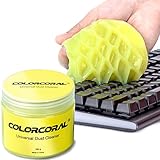
- Universal fit: ColorCoral cleaning gel, simple and convenient cleaning kits for PC/laptop keyboard and other rugged surface, such as the car vent, camera, printer, telephone, calculator, Instrument, speaker, air conditioner, TV and other appliances
- Safe cleaning gel: The keyboard cleaner gel is made from natural gel, no sticky to hands, smells sweet with lemon fragrance, no stimulation to skin
- Easy dust cleaning: Make sure your hands are dry and clean, knead the cleaning gel into a ball, press the cleaning gel slowly into the keyboard, car vent and rugged surface till the cleaning gel could touch the bottom and then pull out, the dust would be carried away with the cleaning gel
- Reusable: The keyboard cleaning gel could be used repeatedly till the color turn to dark or it become sticky, then you have to replace the cleaning gel with a new one. After cleaning, please stock the cleaning gel in cool place. (Note: Don’t wash the gel in water.)
- In the package: 1 can of universal cleaning gel, we provide the cleaning gel with brand new, if you find the package broken, the cleaning gel dirty, or any other quality issues, please email us through message, we provide you new one soon
- Choose FFmpeg for a direct command, repeatable conversions, scripting, or explicit PCM codec selection.
- Choose VLC if you want a graphical Convert/Save process and can confirm that the selected profile writes WAV/PCM.
- Choose Audacity if conversion is followed by trimming, cleanup, or other audio editing, and you have its optional FFmpeg support for WMA.
- Prefer local tools when you do not want to upload audio to an online converter. FFmpeg, VLC, and Audacity are desktop workflows rather than an upload-based conversion service.
For one file and no editing, FFmpeg’s single command is the most concise route. For users who would rather follow menus, VLC is a practical alternative. For an editing session, Audacity may reduce the need to move between applications. For a large set of files, FFmpeg is generally the easiest of these choices to make consistent because the same command pattern can be scripted for each filename.
Can you convert WMA to WAV without losing quality?
You can convert without adding another lossy compression stage by writing uncompressed PCM, but you cannot preserve information that the original lossy WMA already discarded. The WAV may be technically uncompressed while still sounding no better than the WMA source. Treat it as a compatible, editable representation of the decoded audio, not as a restoration.
If a specification calls for a particular PCM quantization, use an explicit FFmpeg codec and verify the output. A 24-bit WAV made from WMA is not automatically higher fidelity than a 16-bit WAV; selecting a larger number does not recreate missing detail. The meaningful question is whether the output meets the receiving application’s format requirement.
The Tool Desk
Outbyte PC Repair FREEClear out junk files and repair common Windows errorsFree Scan →Outbyte Driver Updater FREEFix the driver behind crashes, sound loss and screen glitchesFind Drivers →How can I verify the WAV file?
Check the output before deleting, moving, or archiving the source. A successful conversion message is not a substitute for confirming that the WAV contains the audio you expected.
- Open the WAV in a trusted player or audio editor.
- Confirm that the expected audio stream is present and that playback reaches the expected duration.
- Check channel count and sample rate; check bit depth too if the workflow requires a particular value.
- Listen for an unexpected gap, truncation, silence, or wrong source file.
- Keep the WMA until the new file has passed those checks.
- Remember that a larger WAV is normal for uncompressed PCM and does not mean the sound has improved.
For a file with a particular technical requirement, inspect the output properties rather than relying on the extension alone. FFmpeg’s default is 16-bit signed PCM when no output encoding is specified; specify the appropriate codec if a different quantization is required. If you converted several files, verify representative files and confirm that each destination has the expected name and duration rather than assuming that one successful output proves every input worked.
What if the conversion fails?
Start by checking the path, filename, selected output profile, and whether the source is protected. A conversion failure can involve the file or its rights restrictions, not just the chosen tool.
- FFmpeg cannot find the input: confirm that the terminal is in the folder containing the WMA, or use the file’s full path. Quote filenames that contain spaces. Check the spelling and capitalization of the extension.
- FFmpeg stops with an overwrite prompt: inspect the destination before replacing it. Choose a new output name if the existing WAV is a verified file you want to retain.
- The destination is not WAV audio: in VLC, recheck the selected profile. Profile names vary by build; confirm WAV/PCM output rather than trusting the extension.
- Audacity does not offer WMA import/export: check that its optional FFmpeg library is installed and available. Audacity lists WMA version 2 among formats supported through FFmpeg.
- The source opens but has no usable audio stream: try opening it in a trusted player and inspect whether it is damaged, incomplete, or contains an unusual stream. A converter cannot create audio that is absent from the file.
- A protected file will not convert: ASF can package content with Windows Media Rights Manager. Microsoft’s file-format information explains that ASF can carry Windows Media content, and a rights-managed file may require appropriate authorization or compatible rights-management support. Do not assume every protected WMA can be converted.
- The WAV is larger than the WMA: that is expected when compressed audio is written as uncompressed PCM. It is not, by itself, evidence of a problem.
- Playback differs between applications: compare duration, channels, sample rate, and bit depth. Also confirm that the application is opening the new WAV rather than the original WMA or an older destination file.
Microsoft’s description of WMA as audio compressed with the WMA codec inside ASF-based files helps explain why rights management may matter: the container can carry more than an ordinary unprotected audio stream. Use only files for which you have the authorization and access needed. The reviewed documentation does not provide a general method for bypassing protection, so a protected file may need to be obtained again in an authorized, unprotected form.
Can I convert several WMA files at once?
FFmpeg is the most suitable of these options for a repeatable batch workflow because its commands can be scripted consistently. The single-file command shown here converts one input; a batch script needs to provide each source and destination filename. Test the pattern on one or two files first, verify the WAV properties, and only then process the rest. Keep source and destination folders distinct so that it is harder to confuse an output with an input.
Shopping ad

- Award-Winning Compact Design & EDC-Ready Gift Choice: Weighing only 0.09 lb and sized like a credit card, this compact laser measure is designed for everyday carry. It slips easily into a pocket, tool pouch, or bag, and can attach to a keychain for quick access wherever you go. Its minimalist design, premium tactile finish, and practical one-button measuring make it a useful EDC gadget for DIYers, real estate agents, homeowners, and tech enthusiasts. A thoughtful gift for men on any occasion
- One-Button Easy Measuring, Simple to Use: Designed with simple one-button operation, this compact laser tape measure makes quick measuring easy without complicated controls. Just press to measure room dimensions, furniture spacing, window height, wall décor placement, and everyday distances around the home. Ideal for users who want a smart, pocket-size measuring tool that fits naturally into an everyday carry (EDC) setup and feels intuitive, modern, and easy to use
- Fast & Accurate Indoor Measurements with Class 2 Laser: Measure distances from 0.16 ft to 98 ft with up to ±1/16 in / ±2 mm accuracy. With quick measurement response in about 0.2 seconds, HOTO helps you check spaces efficiently for home renovation, furniture layout, moving, decorating, craft projects, and DIY planning. Built with a Class 2 laser for everyday indoor measuring; use as directed and avoid direct eye exposure
- Low-Power OLED Display & USB-C Rechargeable Convenience: The low-power OLED display provides clear indoor readings while helping reduce battery drain. With USB-C rechargeable design, auto shut-off, and up to 1000 measurements per charge, this digital laser measure is built for repeated daily use without frequent battery replacement. Compact enough to keep in a drawer, toolbox, bag, or pocket
- Useful for Home, Work & Everyday Projects: From home renovation and furniture measuring to room planning, real estate checks, interior design, and light construction projects, this pocket-size laser distance measure is made for practical everyday use. Compact enough to keep in a drawer, toolbox, bag, or pocket, it is a stylish measuring tool that feels just as giftable as it is useful
VLC and Audacity can be practical for a small number of files, but their graphical workflows require more repeated selections and make it easier to overlook a profile or export setting. If consistency matters, write down the command or profile and the expected output properties before starting the collection.
Can I change the sample rate or channels?
FFmpeg exposes options for sample rate and channel configuration, so it provides more control than a basic graphical conversion profile. Use those controls only when the receiving application or project specifies a target. Changing them is a format conversion, not a quality recovery step. Inspect the resulting WAV’s sample rate and channel count after conversion, because the output must be checked rather than inferred from the command’s filename.
If no target is required, retaining the input channel configuration and sample rate avoids an unnecessary transformation. SWGDE specifically notes that FFmpeg retains those properties under the documented default while using 16-bit signed PCM unless another encoding scheme is specified.
Does changing the file extension from .wma to .wav convert the audio?
No. Renaming changes the filename, not the compressed audio encoding or the file’s contents. Use a converter to decode the WMA stream and write a WAV/PCM output. A renamed WMA may fail to open, or an application may misidentify it, because the bytes still describe the original compressed format.
How we picked
This guide focuses on the three workflows directly supported by the cited product documentation: FFmpeg for command-line conversion and PCM control, VLC for graphical Convert/Save, and Audacity for conversion with optional FFmpeg support when editing is also needed. The comparison reflects documented workflow differences, not a performance test or product ranking based on hands-on use. The commands and cautions are intended to make the result reproducible while preserving the original file and acknowledging the limits of lossy source audio.
Frequently Asked Questions
Can I convert several WMA files at once?
FFmpeg is the most suitable of these options for a repeatable batch workflow because its commands can be scripted consistently. The single-file command shown here converts one input; a batch script needs to provide each source and destination filename. Test the pattern on a small set and verify the outputs before processing the entire collection.
Can I change the sample rate while converting WMA to WAV?
FFmpeg exposes sample-rate options, so it provides more control than a basic graphical conversion profile. If a particular sample rate is required, inspect the output properties after conversion rather than assuming it matches the target. If no target is required, retaining the input rate avoids an unnecessary transformation.
Can I change the channel count while converting?
FFmpeg provides channel-configuration controls, but use them only when the receiving application or project requires a particular layout. Check the resulting channel count after conversion; changing channels does not restore information lost in WMA encoding.
Does changing the file extension from .wma to .wav convert the audio?
No. Renaming changes the filename, not the compressed audio encoding or the file’s contents. Use a converter to decode the WMA stream and write a WAV/PCM output.
Will converting WMA to WAV improve sound quality?
No. WAV is uncompressed PCM, but conversion cannot reconstruct details discarded by lossy WMA encoding. It improves compatibility with software that requires WAV; it does not restore the original recording.
The Bottom Line
For a dependable conversion, run ffmpeg -i input.wma output.wav, verify the WAV’s duration and audio properties, and keep the WMA until the check is complete. Use VLC when you want menus, or Audacity when editing is part of the job. The WAV will be uncompressed and potentially much larger, but it will not restore detail lost in lossy WMA encoding.
The Tool Desk
Outbyte PC Repair FREEClear out junk files and repair common Windows errorsFree Scan →Outbyte Driver Updater FREEScan for outdated or missing drivers - takes under a minuteDriver Scan →More shopping ads
Product prices and availability are accurate as of the date/time indicated and are subject to change. Any price and availability information displayed on Amazon at the time of purchase will apply.

