The Geeks Club is reader-supported. When you buy through links on our site, we may earn an affiliate commission. As an Amazon Associate I earn from qualifying purchases. Learn more
Ubuntu’s best screen recorder depends on what you are making and whether your desktop runs Wayland or X11. Use the built-in GNOME recorder for a quick clip, Kooha for a simple graphical workflow, OBS Studio for tutorials or live streams, GPU Screen Recorder for gaming, SimpleScreenRecorder for traditional X11/OpenGL capture, and vokoscreenNG for guided screencasts. The recommendations below are workflow-based rather than results from a common performance benchmark.
Before installing anything, check your session: open Settings → About and look for Windowing System, or run echo $XDG_SESSION_TYPE in Terminal. A Wayland desktop commonly relies on PipeWire and desktop portals for capture, while some older recorders expect X11.
At a glance
| Name | Best for | Key spec | Platforms | Checked |
|---|---|---|---|---|
| Ubuntu/GNOME built-in recorder | Fast clips with minimal setup | Integrated desktop recording | Ubuntu GNOME desktop | Nov 2026 |
| Kooha | Simple graphical capture | Wayland capture through PipeWire and portals | Linux | Nov 2026 |
| OBS Studio | Tutorials, multiple sources and streaming | Scenes, webcam/capture-card sources, audio mixing and filters | Linux, Windows, macOS | Nov 2026 |
| GPU Screen Recorder | Gameplay capture | GPU-oriented recording workflow | Linux | Nov 2026 |
| SimpleScreenRecorder | X11 and OpenGL capture | Traditional desktop and OpenGL recording | Linux | Nov 2026 |
| vokoscreenNG | Guided screencasts | Recorder built around instructional demonstrations | Linux | Nov 2026 |
The comparison reflects the documented use cases and compatibility notes for each project. It is not a lab ranking of frame rates, resource use or image quality.
Recommended Free Tools
1. Ubuntu/GNOME built-in recorder: who is it for?
The recorder integrated into the Ubuntu GNOME desktop is the quickest choice when you need a short clip and do not want to configure scenes, sources or a separate application. It is the natural first stop for showing a bug, demonstrating a setting or sending a brief explanation.
Shopping ad

- [Convenient Setup] Plug and play recording USB microphone for PC, with 5.9-Foot USB cable included for computer PC laptop, is connected directly to USB-A port for recording music, computer singing or podcast. The office condenser microphone for computer is easy to use and install. (NOT compatible with Xbox and Phones)
- [Durable Metal Design] Solid sturdy metal construction design, the computer microphone for Zoom meetings with stable tripod stand is convenient when you are doing voice overs or livestreams on YouTube. Durable material extends the service life of the voice-over microphone.
- [Mic Volume Knob] Gaming condenser USB mic compatible for PS4 with additional volume knob itself has a louder or quieter adjustment and is more sensitive. Your voice would be heard well enough through the zoom microphone USB when gaming, skyping or voice recording. Also, you can adjust your volume to zero and protect your privacy.
- [Widely Use] USB-powered design, the condenser microphone for recording no need the 48v Phantom power supply, works well with Cortana, Discord, voice chat and voice recognition. The podcast microphone for Mac, with USB-B to USB-A/C cable, is compatible with desktop, laptop or PS4/PS5, which meets most of your daily recording needs.
- [Clear Output Voice] Cardioid condenser microphone for PC captures your voice properly, producing clear smooth and crisp sound. Great computer recording mic for gamers/streamers/youtubers focus on the main source and reduces background noise. The streaming microphone does the job well for broadcast ,OBS and teamspeak.
What it does
The feature is part of the desktop rather than a separately installed production suite. Its value is immediate availability and a short path from opening the desktop controls to starting a recording.
Platforms and limits
It is intended for Ubuntu installations using the GNOME desktop. Available controls can vary with the Ubuntu and GNOME version, so check the controls shown on your installation before planning a long tutorial. It is not the right fit when you need several video sources, a webcam layout, detailed audio mixing or a stream output.
Best use
Choose it for a one-off clip, a short support recording or a quick demonstration. If the recording needs narration, multiple windows, a camera feed or repeatable scene layouts, move to OBS Studio instead.
2. Kooha: who is it for?
Kooha suits people who want a straightforward graphical recorder without the production-board complexity of a full streaming application. Its simple workflow is especially attractive on a Wayland session, provided the PipeWire and desktop-portal components are functioning.
Standout features
- Graphical controls aimed at uncomplicated desktop capture.
- Wayland recording that depends on the desktop’s PipeWire and portal stack.
- A smaller configuration surface than a scene-based production application.
Platforms and compatibility
Kooha is a Linux application. On Wayland, the portal permission flow is part of capture: you may be asked to select a monitor or window and approve access. A failure at that prompt can indicate a portal or PipeWire configuration issue rather than a fault in the recorder itself.
Limits
Kooha is not positioned as a multi-source studio. If your project requires a webcam composition, capture card, several audio buses or live streaming, OBS Studio provides the more appropriate model. Verify that your Ubuntu desktop’s portal implementation is working before relying on Kooha for an important recording.
3. OBS Studio: who is it for?
OBS Studio is the strongest all-purpose choice for Ubuntu users making narrated tutorials, demonstrations with several windows, webcam presentations or live streams. The OBS Project describes it as software for “capturing, compositing, encoding, recording, and streaming video content, efficiently.” Its flexibility comes with more setup than a basic clip requires.
Free tools Windows power users keep installed
One-click scans. No signup required.
Shopping ad

- Studio-Quality Sound for Clear Podcast Recording – The K66 USB podcast microphone delivers studio-quality, broadcast-level audio using a high-performance condenser capsule and cardioid pickup pattern that focuses on your voice while reducing unwanted background noise. Designed as a reliable microphone for PC, it features a wide 40Hz–18kHz frequency response and a 46kHz sampling rate to reproduce rich lows, smooth mids, and clear highs for natural, detailed vocals. With –45dB ±3dB sensitivity, it captures balanced sound without distortion during expressive speaking. Ideal for podcasting, voice-over, online classes, meetings, and professional content creation.
- Intelligent Noise Reduction Mode for Cleaner Podcast Audio – This podcast microphone features an advanced Noise Reduction Mode designed for clearer, more focused voice recording in real-world environments. Press and hold the mute button to enable noise reduction (blue indicator). In this mode, the microphone helps reduce keyboard clicks, PC fan noise, air conditioner hum, and background chatter. Default Mode maintains a warm, natural vocal tone for quiet spaces. Designed as a reliable microphone for PC, it allows creators to identify the active mode instantly and adapt as needed, ensuring clear audio for podcasting, gaming, streaming, online classes, meetings, and recording.
- True Plug-and-Play USB Microphone with Wide Device Compatibility – Engineered for effortless plug-and-play use, the K66 USB microphone requires no drivers, apps, or software installation. Simply connect and start recording on Windows PC, Mac, laptops, PS4, PS5, and tablets. Included USB-C and Lightning adapters ensure seamless compatibility with iPhone, iPad, and modern USB-C phones and devices, making it easy to switch between desktop and mobile recording. Ideal for creators working across multiple platforms, this microphone delivers consistent, high-quality audio for YouTube, TikTok, Twitch, Zoom, Discord, OBS Studio, Streamlabs, podcasting, livestreaming, and professional voice recording.
- Real-Time Zero-Latency Monitoring with Adjustable Volume Control – This podcast microphone features real-time, zero-latency monitoring through a built-in 3.5mm headphone jack, allowing you to hear exactly what’s being recorded without delay. Designed as a reliable microphone for PC, it includes a dedicated monitoring volume control that lets you adjust headphone listening levels independently for accurate and comfortable audio monitoring. Real-time feedback helps identify distortion, background noise, or uneven volume before it affects your final recording, making this podcast microphone ideal for podcasting, streaming, online teaching, voice-over work, and professional content creation.
- Precision Audio Adjustment Knobs for Full Sound Control – This podcast microphone gives creators hands-on control with dedicated knobs for microphone volume, monitoring volume, and echo adjustment. Fine-tune mic gain to maintain clear, balanced vocal output, adjust headphone monitoring levels independently for comfortable listening, and add or reduce echo to enhance depth and presence. Designed as a reliable PC microphone, these intuitive physical controls allow fast, on-the-fly adjustments without software, helping identify distortion, background noise, or level inconsistencies instantly. Ideal for podcasting, streaming, ASMR, voice-overs, singing, and professional multi-platform recording.
Standout features
- Scenes: assemble reusable layouts for a desktop, webcam, game or presentation.
- Multiple sources: the Flathub listing identifies sources such as webcams and capture cards.
- Audio mixing and filters: combine desktop and microphone paths and adjust them independently.
- Recording and streaming: use the same scene structure for a local file or a live broadcast.
Platforms and installation
OBS runs on Linux, Windows and macOS. On Ubuntu, the project’s Linux installation guide documents an Ubuntu PPA route and lists Flathub as a distribution option. Installation instructions and supported Ubuntu versions can change, so use the current official Linux installation guide and verify the latest details on the official download page rather than copying an old third-party command.
Microphone and audio setup
OBS documents Linux audio sources through ALSA and PulseAudio. In a narrated tutorial, add an audio-input source, select the microphone and watch the mixer while speaking. Record a short sample before the full session so you can confirm that the microphone is present and that desktop audio is not overwhelming your voice. The OBS Linux audio guide explains the available source paths.
Limits
OBS exposes considerably more controls than a quick clip needs. You must decide how to arrange scenes, sources and audio before recording, and Wayland capture can involve the desktop portal permission flow. It is the best fit when that control solves a real requirement, not merely because it has the longest feature list.
OBS Studio on Flathub · OBS Studio project repository
4. GPU Screen Recorder: who is it for?
GPU Screen Recorder is the gaming-focused option in this shortlist. It is aimed at capturing gameplay rather than building a presentation with many independent sources.
What it does
Its emphasis is a GPU-oriented recording workflow, making it a candidate for players who want to save gameplay footage or create game clips. The comparison that informs this list places it specifically in the gaming category.
Platforms and limits
It is a Linux recorder. Compatibility depends on the particular GPU, graphics driver and desktop session, so confirm support for your hardware and Ubuntu setup before treating it as a drop-in solution. No common hardware or frame-rate benchmark establishes how it compares with the other choices.
Shopping ad
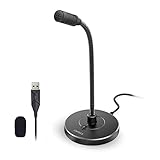
- 【Crystal Clear Audio Quality】Our Omnidirectional pattern condenser microphone accurately captures your voice, making it perfect for dictation, online classrooms, and more.
- 【Active Noise-Cancelling】Come in CMTECK CCS2.0 SMART CHIP with Omnidirectional Polar Pattern, which can effectively block the background noise. The pop filter prevents plosives from overloading the microphone, ensuring only your voice is heard.7
- 【Convenient Mute Button with LED Indicator】You can quickly mute/un-mute the microphone with the Mute Button and the built-in LED light lets you know the working status(Greenlight: Connected; Red light: Mute mode).
- 【Easy to use】 No drivers needed, just plug and record without external power supply, directly connect the microphone to a USB compatible device, well compatible with Windows(7, 8 and 10), Mac OS and PS4 (NOT compatible with Raspberry Pi/Linux/Android)
- 【Mini size with Adjustable Gooseneck】Adopted flexible and adjustable gooseneck metal pipe, easily adjust position 360 degrees to suit user comfort. The compact and stable base maximizes your desktop space.
Best use
Pick it when the game is the subject and you want a recorder centered on that workload. For a tutorial that combines a game window, webcam, slides and several microphone sources, OBS Studio’s scene and mixer model is more suitable.
Outdated Drivers Are Slowing You Down
One free scan finds every outdated or missing driver and matches the right update for your exact hardware.Free scan · exact hardware matchWindows Errors? Fix Them Before They Spread
Repair common Windows errors and clear accumulated junk for a smoother, more stable PC - no reinstall needed.Free scan · no reinstall5. SimpleScreenRecorder: who is it for?
SimpleScreenRecorder remains a candidate for users on a conventional X11 desktop who need screen or OpenGL capture and prefer a traditional recorder interface.
Standout fit
- Classic desktop recording on X11.
- OpenGL capture for applications that render through that API.
- A focused alternative to a scene-based streaming studio.
Compatibility caveat
Treat X11 as a requirement to investigate, not a footnote. The comparison places SimpleScreenRecorder in the X11/OpenGL category and does not establish native capture of a Wayland desktop. Check echo $XDG_SESSION_TYPE before troubleshooting; if it returns wayland, choose a Wayland-aware workflow or switch to an X11 session where appropriate.
Limits
It is not the first recommendation for a Wayland-only Ubuntu installation, and it is not designed around streaming scenes, webcam layouts or elaborate audio routing. Its appeal is the conventional X11/OpenGL use case.
SimpleScreenRecorder project site
6. vokoscreenNG: who is it for?
vokoscreenNG is suited to guided screencasts: recordings in which the viewer follows a sequence of actions, settings or explanations on the desktop.
What it does
The comparison positions vokoscreenNG as a guided-screencast tool, making it a sensible middle ground between a minimal clip recorder and a full broadcast studio. It can be considered when the structure of the demonstration matters more than live-stream production features.
Platforms and limits
vokoscreenNG is a Linux application. Confirm the current release’s compatibility with your Ubuntu version, desktop session and portal configuration before an important recording; a complete compatibility matrix across Ubuntu releases and compositors is not established here.
Shopping ad

- [Natural Audio Clarity] Operated with frequency response of 50Hz-16KHz, the podcasting XLR mic delivers balanced audio range, likely to resonate with your audience. Directional cardioid dynamic microphone corded will not exaggerate your voice, while rejects unwanted off-axis noise for vocal originality and intelligibility during your PS5 gaming streaming video recording. (Tips: Keep the top of end-addressing XLR dynamic microphone AM8 facing audio source, and suggested recording range is 2 to 6 in.)
- [XLR Connection Upgrade-Ability] To use XLR connection, connect the podcast microphone to an audio interface (or mixer) using a separate XLR cable (NOT Included) . Well-connected and smooth operation improves audio flexibility to make you explore various types of music recording singing. The streaming mic isolates the pristine and accurate sound from ambient noise with greater no interference and fidelity. (RGB and function key on mic are INACTIVE when using XLR connection.)
- [USB Connection with Handy Mute] Skip the hassle of setting something up and plug the cable to play the dynamic USB microphone directly, which suits for beginner creators or daily podcast. You can quickly control the gamer mic with tap-to-mute that is independent of computer/Macbook programs to keep privacy when live streaming. LED mute reminder helps you get rid of forgetting to cancel the mute. (RGB and function key are only available for USB connection, but NOT for XLR connection)
- [Soothing Controllable RGB] RGB ring on the desktop gaming microphone for PC, with 3 modes and more than 10 light colors collection, matches your PC gears accessories for gaming synergy even in dim room. You can control the RGB key button of the dynamic microphone USB directly for game color scheme gaming or live streaming. Configured memory function, the streaming microphone RGB no need to repeated selections after turnning off and brings itself alive when power on. (Only available for USB connection)
- [More Function Keys] Computer microphone with headphones jack upgrades your rhythm game experience and gets feedback whether the real-time voice your audience hear as expected. Get the desired level via monitoring volume control when gaming recording. Smooth mic gain knob on the PC microphone gaming has some resistance to the point, easily for audio attenuation or boost presence to less post-production audio. (Only available for USB connection)
Best use
Use it for step-by-step software walkthroughs, training clips and instructional demonstrations. If the project grows to multiple cameras, capture cards, elaborate scenes or live streaming, OBS Studio offers the broader production toolset.
How do you choose a screen recorder for Ubuntu?
Start with the recording you need to deliver, then check the desktop session and the sources involved. The following decision path avoids installing a tool whose workflow conflicts with your setup.
Do these 3 things before closing this tab:
1Repair Windows errors before they cause bigger problems2Scan for outdated or missing drivers - takes under a minute3Clear out junk files and repair common Windows errors- For a quick clip, start built in. Use Ubuntu/GNOME’s recorder when the recording is short and you do not need a camera, capture card or complex audio.
- For a simple graphical recorder on Wayland, consider Kooha. Make sure PipeWire and the desktop portals can provide the monitor or window-selection prompt.
- For a narrated tutorial, choose between vokoscreenNG and OBS. VokoscreenNG is oriented toward guided screencasts; OBS is better when the tutorial needs reusable scenes, a webcam, several sources or audio filters.
- For streaming, use OBS Studio. Its documented scene, source, recording and streaming model is built for that combination.
- For gameplay, evaluate GPU Screen Recorder first. Check the GPU, driver and desktop combination before committing to it.
- For X11/OpenGL capture, consider SimpleScreenRecorder. Do not assume that an X11-oriented workflow will capture a Wayland session natively.
- Check audio requirements. A microphone is optional hardware, not a prerequisite for every recording. OBS can use ALSA or PulseAudio input sources when you need narration.
- Confirm the installation route. For OBS, use the current project documentation because PPA details, Flatpak availability and supported Ubuntu versions can change.
What should Wayland users check before recording?
Wayland capture commonly goes through PipeWire and desktop portals, so a permission dialog and source-selection step can be normal. If the dialog never appears or the recorder cannot see a monitor, check that the portal services and PipeWire session are running for your desktop before changing applications.
SimpleScreenRecorder’s documented fit is X11/OpenGL, while Kooha’s Wayland workflow explicitly depends on the portal and PipeWire stack. OBS can also encounter desktop-specific permission behavior because capture is mediated by the session. Record a short sample after granting access; this confirms that the selected window or monitor and the expected audio sources are actually present.
Independent reader supportYour contribution helps us test, update, and keep practical guides available for everyone.How do you record a narrated Ubuntu tutorial?
Use OBS Studio when the tutorial needs a microphone, webcam or more than one visual source. Add the display or window source, add an audio-input source for the microphone, set the desktop-audio source if needed, and watch the mixer while speaking.
- Install OBS through the current official Ubuntu instructions or the listed Flathub option.
- Create a scene for the tutorial and add the display or application window.
- Add the microphone through the Linux audio-input path documented by OBS.
- Add a webcam or capture card only if the tutorial needs it; OBS’s scene system can combine those sources.
- Make a short recording and play it back to confirm voice, desktop sound and the intended screen are all present.
- Save the scene arrangement so later lessons use the same layout.
A USB microphone can improve voiceover consistency, but the recorder does not require a particular model. Choose equipment according to your room and connection needs rather than treating a microphone as part of the recorder software itself.
The Tool Desk
Outbyte PC Repair FREEClear out junk files and repair common Windows errorsFree Scan →Outbyte Driver Updater FREEFix the driver behind crashes, sound loss and screen glitchesFind Drivers →What are the common failure points?
- Black or missing capture on Wayland: look for a portal permission prompt and verify PipeWire and desktop-portal services.
- Recorder works on one session but not another: compare
$XDG_SESSION_TYPE; an X11-oriented application may not provide the same result on Wayland. - No microphone in OBS: review the ALSA/PulseAudio input source and the selected device, then make a short sample recording.
- Too much configuration for a short clip: return to the built-in GNOME recorder or Kooha instead of building an OBS scene.
- Game capture compatibility is uncertain: verify the GPU, driver and desktop combination for GPU Screen Recorder before recording a long session.
- Old installation commands fail: follow the current project documentation, especially for OBS PPA and Ubuntu-version support.
How we picked these Ubuntu recorders
The shortlist is organized around four reader decisions: quick setup versus production control, Wayland versus X11 behavior, workload (clip, tutorial, gameplay or stream), and the need for microphones, webcams or multiple sources. The ranking reflects those documented use cases and compatibility cautions, not an unperformed benchmark of speed, resource consumption or output quality.
Shopping ad

- [USB Output] Enables simple setup. USB studio recording microphone kit provides a direct convenient plug-and-play connection to pc and laptop without any additional hardware or drivers for recording vocals, podcasts and Skype. Studio microphone for recording vocals is never been easier to get high-quality sound for your voice and computer-based audio recordings. (Incompatible with Xbox)
- [Excellent Sound Quality] With rugged construction for durable performance, the vocal recording microphone, USB condenser mic for PC,offers a wide frequency response and handles high SPLs with ease. Ideal for project/home-studio applications. The cardioid condenser capsule captures crystal-clear audio from the front and avoid ambient noise when communicating/creating/recording. Comes ready to go with a desktop mic boom arm stand and 8.2ft USB cable, you're guaranteed to get great-sounding results.
- [Durable Arm Set] The podcast microphone bundle with versatile and sturdy broadcast suspension boom scissor arm with 180° up and down rotation, 135° forward and backward extension for optimal adjustment, for capturing your voice in podcast or voiceover. The double pop filter attached on the music recording microphone provides two layers of dissipation, removes the rush of air, minimize the popping sounds or cancel noise that can compromise your recording, great for studio as well as home use.
- [Easy to Attach] The streaming microphone for PC includes adjustable boom studio scissor arm stand that features a heavy-duty combo mount consisting of a sturdy C-clamp and a detachable desktop mount. With 13" fixed horizontal arm and offers a 30" reach, the low-profile, table-hugging design of audio recording microphone allows on-air talent to perform without facial obstruction to record in podcasting or make dubbing sounds for videos, use voice chat in Discord or online conference on Zoom or Skype.
- [The Accessory Package Includes] The studio microphone music recording comes with practical accessories for you to use in most of recording. The scissor arm stand is made out of all steel construction, sturdy and durable, a studio-grade shock mount, a double pop filter, premium 8.2' USB-B to USB-A/C cable, a podcast PC gaming microphone, a user manual and friendly Technical Support.
Frequently Asked Questions
Can I record my Ubuntu screen without installing an app?
Yes, an Ubuntu installation using the GNOME desktop may include a built-in recorder for short clips. The controls available to you depend on the Ubuntu and GNOME version, so open the desktop recording controls and confirm what they offer before planning a long production.
Why does a Wayland recorder ask me to choose a monitor or window?
Wayland commonly delegates screen capture to desktop portals and PipeWire. The selection and permission dialog is how the desktop grants an application access to a specific source; if it does not appear, investigate the portal and PipeWire services for your desktop session.
Can OBS record only my microphone and not desktop audio?
Yes. OBS’s Linux audio sources include ALSA and PulseAudio paths, so you can add a microphone input without adding a desktop-audio source. Check the mixer while speaking and make a short sample to confirm the routing.
Quick wins for a faster PC:
Clear out junk files and repair common Windows errorsFree Scan →Scan for outdated or missing drivers - takes under a minuteDriver Scan →Is an X11 recorder suitable for an Ubuntu Wayland session?
Not automatically. SimpleScreenRecorder is positioned for X11/OpenGL capture, while Wayland uses a different capture and permission path. Check your session type and choose a recorder whose documented workflow matches it.
Do I need a webcam for an Ubuntu tutorial?
No. A tutorial can use a display or window source and a microphone alone. Add a webcam only when your presentation benefits from a camera view; OBS scenes can combine it with the desktop and other sources.
The Bottom Line
For most Ubuntu users, choose the built-in GNOME recorder for a quick clip, Kooha for simple Wayland-friendly capture, OBS Studio for tutorials and streaming, GPU Screen Recorder for gameplay, SimpleScreenRecorder for X11/OpenGL, and vokoscreenNG for guided demonstrations. Confirm your Wayland or X11 session and make a short sample before recording the final take.
Quick Recap
Product prices and availability are accurate as of the date/time indicated and are subject to change. Any price and availability information displayed on Amazon at the time of purchase will apply.
What’s actually slowing this PC down?
Pick the symptom - the matching free tool is one click away.

