The Geeks Club is reader-supported. When you buy through links on our site, we may earn an affiliate commission. As an Amazon Associate I earn from qualifying purchases. Learn more
To convert an audio file to MP3, open it in Audacity, choose File → Export Audio, select MP3, set the destination and export options, then save. If the receiving device or service specifies a bitrate or other settings, use those requirements; otherwise, Audacity’s manual suggests 128 kbps for speech and 256 kbps for music.
MP3 export settings at a glance
| Audio or need | Suggested choice | Why it matters |
|---|---|---|
| Speech | 128 kbps starting point | Suitable starting guidance when the destination has no specific requirement. |
| Music | 256 kbps starting point | Higher bitrate than the speech suggestion; bitrate affects file size and quality. |
| Mono source | Export as mono | Stereo export duplicates the mono channel and increases file size. |
| Destination specifies settings | Follow its delivery requirements | Destination instructions take precedence over general starting settings. |
These are Audacity Manual recommendations, not guarantees that every site or device accepts those settings. See Audacity’s export guidance for the current options.
General shopping ads
Before you convert: check the destination
The receiving service, device or person is the most important source of requirements. A platform may specify a format, bitrate, channel layout or maximum file size. If it does, copy those values into Audacity’s export dialog rather than relying on a general preset. A setting that is appropriate for a spoken memo may not be appropriate for a music upload, and a file that plays on your computer may still be rejected by a service with stricter rules.
What’s actually slowing this PC down?
Pick the symptom - the matching free tool is one click away.
Also check whether you actually need a conversion. If the source is already an MP3 and meets the destination’s requirements, sending that file without another encode avoids an unnecessary lossy generation. If the destination accepts the source format and quality, conversion changes the file without solving a compatibility problem.
Shopping ad
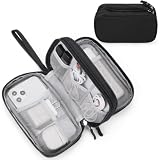
- Dimensions: 7.5" x 4.3" x 2.2". Compact size and lightweight make it easy to carry and put into your backpack, handbags or laptop bag without taking much space. Suitable for family use and daily organization. Note: Small mesh pockets are ideal for charging cords no longer than 3ft; longer cables (over 3ft) fit better in the larger compartments
- Quality Material: This electronic organizer travel case made of high quality durable waterproof oxford and soft sponge inside to secure your gadgets in place and deliver a quick access whenever you want. Water-resistant fabric protects your gear from unexpected splashes, keeping all your electronic essentials safe and secure
- Double Layers Design: This tech pouch features a double-layer interior design with 8 compartments, including multiple see-through mesh pockets and ample space to store your cords, cables, USB drives, cellphone, charger, mouse, flash drive and more, keeping all accessories neatly organized and tangle-free
- Practical and Convenient: Comes with a comfortable hand strap for easy carrying; You may carry it in your hand when heading out. Durable and smooth zipper closure keeps your favorite device securely, convenient for you to have quick access to the items inside the case
- Portable and Lightweight: The small size and lightweight design durable cable organizer pouch is a perfect choice when going on holiday, business trip, travel, office. Enjoy hassle-free travel without wasting time on tangled accessories. Great gift for yourself also a nice share with families and friends. (No include cords, electronic accessories)
Have the source file available in a location you can read, and decide where the finished file should go before exporting. A clear name such as interview-episode-01.mp3 makes it easier to distinguish the new file from the original. Keep the original until you have opened and checked the exported copy.
How do I convert an audio file to MP3 in Audacity?
Use Audacity’s export dialog to choose the audio to convert, name the output, set MP3 and choose the relevant audio options. MP3 export support is included by default on Windows and macOS, so the usual workflow does not require a separate MP3 encoder installation.
- Open the source audio. Launch Audacity and use its open or import workflow to load the file. Audacity supports popular formats such as MP3, M4A, AIFF, FLAC and WAV; which formats can be imported can depend on the format and any required libraries. Its official FAQ lists desktop versions for Windows, macOS and Linux.
- Review the project before exporting. Play the beginning, middle and end of the loaded audio. If the project contains more than one track, confirm that the tracks and their timing are the mix you intend to deliver. This is also the point to make any edits you need; exporting will create the MP3 from the project state you choose.
- Choose what to export. Select File → Export Audio, or press Ctrl+Shift+E. In the export dialog, choose the full project mix, selected audio, or a marked loop region. Exporting only a selection or loop is useful when you do not want the whole project in the output file.
- Set the output name and location. Choose a recognizable file name and a destination folder you can find again. Make sure the output format—not merely the file name—will be MP3. Changing an extension in the name does not perform an audio conversion.
- Select MP3 and adjust the options. Pick MP3 from the format menu. The export options include mono or stereo, sample rate and MP3 bitrate. Follow any specification supplied by the service or device receiving the file. If none is given, Audacity’s suggested starting points are 128 kbps for speech and 256 kbps for music.
- Preserve mono when the source is mono. Unless a delivery specification asks for stereo, export a mono recording as mono. A stereo export duplicates the single channel and increases file size without adding a second recorded channel.
- Confirm the settings before saving. Recheck the format, bitrate, channel choice, file name and destination. This short review helps prevent the common mistake of exporting a WAV or another format under an ambiguous name, or saving a large stereo copy when a mono file was requested.
- Export and check the result. Complete the export, then confirm the MP3 is in the selected folder and plays as expected. If it does not, check that the export finished, the destination is correct and the receiving device or service accepts the settings. Open the file in a player and, where practical, inspect its duration and channel presentation against the source.
What do full project, selection and loop export mean?
The export scope controls how much of the Audacity project becomes the new file. The full project mix creates an MP3 containing the entire project. A selected export uses the highlighted portion only, which is useful for extracting a clip or removing material outside a marked range. A loop-region export uses the region you marked for looping. These choices affect duration and content; they do not change the fact that MP3 encoding is lossy.
Free tools Windows power users keep installed
One-click scans. No signup required.
If you expected the whole recording but only selected a short passage, the resulting MP3 will correctly contain only that passage. Conversely, exporting the full project when you intended a short excerpt can produce a file that is longer and larger than needed. Before clicking Export, look at the selection or loop markers and make sure they cover the intended start and end.
Which Audacity option should I use?
Audacity is a straightforward desktop choice when you need to convert one audio file or want to edit audio before saving it as MP3. It runs on Windows, macOS and Linux, and its export dialog supports choosing a section of a project as well as the full mix.
1. Audacity: a free desktop route for conversion and editing
Audacity can import and export common audio formats, including MP3, M4A, AIFF, FLAC and WAV. Its format support and the libraries needed for some inputs can vary. The current installation instructions say MP3 export support is included by default on Windows and macOS; older instructions that required installing LAME separately are no longer the default setup described by the manual. Audacity is available for Windows, macOS and Linux. The cited official pages describe desktop versions and do not provide a paid-plan price or a trial offer.
Its practical strengths for this job are a direct MP3 export workflow, controls for bitrate and mono/stereo, and the ability to export the full project, a selection or a loop region. Its limitation is that it is a desktop audio editor rather than a one-click web converter: you need to install and open the program, and support for some source formats may depend on libraries. For extra formats such as M4A and WMA, Audacity documents optional FFmpeg support; this is separate from the MP3 export setup. See the FFmpeg installation instructions for platform-specific details.
Shopping ad

- 【UPGRADED LAPTOP CLEANING KIT 】 The macbook cleaning kit computer screen cleaner comes with a number of accessories including a retractable large brush, polishing cleaning cloth X 2, keycap puller, metal pen tip, flocking sponge, thin soft brush, soft plastic lens cleaning pen, 5 replacing cloth, large cleaning microfiber cloth. You deserve the comprehensive computer cleaning kit keyboard vacuum at a low cost
- 【PROFESSIONAL KEYBOARD CLEANING KIT】 The laptop screen cleaner keyboard cleaner can pull out the keycaps of gaming keyboards and mechanical keyboards. A retractable keyboard brush works on laptops and keyboards, while the mini high-density brush is great for deep cleaning between keys for cleaning between flatter keys on a laptop, the metal pin tip gently removes any stains. This electronic cleaning kit macbook cleaner totally meets professional cleaning needs
- 【OFFICE DESK ACCESSORIES】This keyboard cleaner kit is easy to use and can clean your keyboard and electronic screen with just one swipe. Wiping with the 2mm thicken widen polishing cleaning cloth designed at a right angle for better fitting screen corners of computers with our recyclable cleaning spray, The laptop cleaner kit for macbook effectively absorbs stubborn stains, leaves no discoloration, no streaks, and no fiber shedding on the screens
- 【MULTIFUNCTIONAL TOOLS 】Mini soft brush and soft plastic lens cleaning pen are specially designed for DSLR camera screen, lens, and other delicate surfaces. 5 more cleaning cloths of it supplied for replacement. The flocking sponge is an excellent tool for cleaning earbuds charging cases, And the earbud cleaning kit is ideal. This electronics for college students is equivalent to 10 other electronic cleaning kit
- 【PORTABLE DESIGN & CLEANER TOOL】 The office supplies is compact in design, easy to carry, and you can easily take it anywhere. It's convenient to keep one in a drawer, one in your car, or in your bag and dorm. It is easy to use and can clean your keyboard and electronic screen with just one swipe. Is the college essentials cleaning tool for your friends, family, colleagues and students
2. When the source will not import
Audacity’s ability to open a particular file depends on the format and any library that format needs. If a file refuses to import, identify its actual format rather than changing only the filename extension. The documented FFmpeg component can add support for formats such as M4A and WMA, but it is not a general requirement for MP3 export. Install an additional component only when the source or target format calls for it, and use the instructions for your operating system and Audacity version.
What bitrate should I use for an MP3?
Start with the destination’s own instructions. If it has none, Audacity’s manual gives 128 kbps as a starting point for speech and 256 kbps for music; these are practical suggestions, not universal requirements.
Bitrate affects the trade-off between file size and audio quality. A higher bitrate generally uses more space, while a lower one makes a smaller file. The best choice depends on what the MP3 is for and what the receiving service accepts. If a podcast host, course platform, device or other destination gives a required bitrate, use that instead of a general recommendation.
Speech often has a narrower range of frequencies and may be adequately represented at the manual’s 128 kbps starting point. Music generally contains more complex material, which is why the manual’s starting point is higher at 256 kbps. Those figures are guidance for the absence of other instructions, not a promise that every listener or service will consider them optimal.
Do these 3 things before closing this tab:
1Scan for outdated or missing drivers - takes under a minute2Repair Windows errors before they cause bigger problems3Fix the driver behind crashes, sound loss and screen glitchesDo not assume that changing a low-bitrate source to a higher bitrate restores quality. MP3 is lossy: the encoding process discards some audio information, and a later conversion cannot bring discarded information back. Re-encoding an already-lossy source may reduce quality further, so avoid another conversion when the source already meets the destination’s format requirements.
Bitrate is only one part of the export choice. Channel mode also affects the resulting file: exporting mono as stereo duplicates the channel and increases size. Sample rate is another option exposed in the export dialog, so use the destination’s specified value when one is supplied rather than changing it casually.
Should I convert mono audio to stereo?
Usually not, unless the delivery instructions require stereo. A mono recording has one channel; exporting it as stereo duplicates that channel and increases file size without adding a separately captured second channel. Preserve mono when the source is mono and the destination accepts it.
Shopping ad

- Compatible Space: This electronics organizer bag features 2 zippered mesh pockets fits phones, standard power banks, 4 elastic loop pouches for small items, 2 elastic loop pouches for wireless headphones and small chargers. Elastic loops for phone charging cable. And specific slots for SD cards. Please check the size to ensure it meets your needs
- Lightweight Travel Accessories: The size of the electronic organizer travel case is 10.6" L x 7.5" W x 1.2" H, Compact but substantial size fits your intended bag or space. Suitable for traveling use and daily organization
- Keep Everything Organized: This compact travel organizer features dedicated compartments for your phone charger, cables, and tech accessories, keeping them tangle-free and ready to go. You can find travel accessories quickly, no chasing cords in your pack anymore
- Durable Travel Essentials: Features double zippers for easy access, elastic loops with non-slip grips for daily protection. Organizer for office use and traveling, (Not including cords, electronic accessories). It can serve as a travel checklist. Before you leave a place, just open the case and check if everything is there, preventing you from leaving things behind
- Versatile Use: Its practicality and convenience make it a travel essential bag. It is suitable for a weekend trip, business trip, and travel. This organizer pouch is suitable for office, business, daily use and can be given as a gift for friends, family, or men, for birthdays, Valentine's Day, Christmas Day, Father's Day
Choosing stereo does not create a second microphone perspective or recover information that was never recorded. It simply places the same mono content in both channels. That can be useful only when a receiving system explicitly requires a stereo file. Otherwise, mono is the more direct representation of the source and avoids the extra size described in Audacity’s export guidance.
Do I need FFmpeg or LAME to export MP3?
For MP3 export on Windows and macOS, Audacity’s current installation manual says support is included by default. FFmpeg is optional and is used to add support for formats such as M4A and WMA, rather than being a prerequisite for the ordinary MP3 export workflow.
Audacity’s setup details can vary by operating system and program version, so use its FFmpeg instructions if you need an additional format and encounter an import or export limitation. Do not install extra components just to perform the standard MP3 export on the platforms where Audacity already includes MP3 support.
Older tutorials may tell you to download LAME before exporting. The current manual describes that as an older arrangement: MP3 support is now included by default on Windows and macOS. A tutorial written for an earlier Audacity release may therefore show dialogs or installation steps that do not match your current version. Check the current manual for the version and platform you are using.
Is MP3 always the best format?
No. MP3 is a practical choice when compatibility is the priority, but use another format when the destination allows it and another property matters more. Audacity’s manual notes that Opus and M4A can be more efficient at the same file size when accepted by the destination; FLAC and WavPack can compress WAV without loss.
Quick wins for a faster PC:
Fix the driver behind crashes, sound loss and screen glitchesFind Drivers →Clear out junk files and repair common Windows errorsFree Scan →Scan for outdated or missing drivers - takes under a minuteDriver Scan →For a source that is already MP3 and meets the destination’s requirements, leaving it alone avoids an unnecessary lossy re-encode. If you need to preserve audio without loss while reducing a WAV file’s size, a lossless format such as FLAC may be more appropriate than converting to MP3. Check compatibility before changing formats.
| Priority | Format direction to consider | Trade-off |
|---|---|---|
| Broad compatibility | MP3 | Commonly accepted, but lossy. |
| Efficiency at a given file size | Opus or M4A, if accepted | Can be more efficient, but compatibility must be checked. |
| Lossless compression of WAV | FLAC or WavPack | Preserves audio information, but may not be accepted by every destination. |
The table is a choice framework, not a rule that one format is universally superior. The destination’s accepted formats and your need to preserve the source determine the appropriate output.
Shopping ad

- Universal fit: ColorCoral cleaning gel, simple and convenient cleaning kits for PC/laptop keyboard and other rugged surface, such as the car vent, camera, printer, telephone, calculator, Instrument, speaker, air conditioner, TV and other appliances
- Safe cleaning gel: The keyboard cleaner gel is made from natural gel, no sticky to hands, smells sweet with lemon fragrance, no stimulation to skin
- Easy dust cleaning: Make sure your hands are dry and clean, knead the cleaning gel into a ball, press the cleaning gel slowly into the keyboard, car vent and rugged surface till the cleaning gel could touch the bottom and then pull out, the dust would be carried away with the cleaning gel
- Reusable: The keyboard cleaning gel could be used repeatedly till the color turn to dark or it become sticky, then you have to replace the cleaning gel with a new one. After cleaning, please stock the cleaning gel in cool place. (Note: Don’t wash the gel in water.)
- In the package: 1 can of universal cleaning gel, we provide the cleaning gel with brand new, if you find the package broken, the cleaning gel dirty, or any other quality issues, please email us through message, we provide you new one soon
How do I choose the right conversion workflow?
Choose based on the destination and what you need to do to the audio—not simply on which format creates the smallest file.
- Need MP3 for compatibility? Export as MP3 and follow the receiving service’s settings. Use Audacity’s speech or music bitrate suggestions only when the destination offers no specification.
- Need to trim or select part of a recording? Use Audacity’s selection or loop-region export scope instead of exporting the entire project.
- Working with a mono recording? Keep the export mono unless stereo is required.
- Already have an MP3 that meets the requirement? Do not convert it again without a reason; another lossy encoding can degrade quality.
- Need a format beyond the usual choices? Check whether Audacity needs an additional library. FFmpeg is the optional component documented for formats such as M4A and WMA.
- Want to retain source quality while shrinking WAV? Consider a lossless format such as FLAC or WavPack if the destination accepts it.
A practical decision sequence
- Read the destination’s upload or playback requirements.
- Compare those requirements with the source file’s existing format and channel layout.
- Skip conversion if the source already satisfies the requirement.
- If conversion is necessary, import the source, select the required scope and choose the specified MP3 settings.
- If no settings are supplied, use 128 kbps for speech or 256 kbps for music as starting points, and preserve mono for a mono source.
- Play the exported file and verify its location, duration and format before sending it.
How to convert a file for Apple Music or iTunes
Audacity documents a separate Apple Music/iTunes workflow: configure the import encoder as MP3 Encoder, select the source file, then choose File → Convert → Create MP3 Version. The exact menu directions differ between Windows and macOS Catalina or later, so follow the platform-specific steps in Audacity’s Apple Music/iTunes tutorial. This route is distinct from exporting through Audacity’s standard File → Export Audio dialog.
Recommended Free Tools
Use this route when the file is being managed through Apple Music or iTunes and you specifically want that application to create the MP3 version. For ordinary Audacity projects, selections or loop regions, the standard Export Audio workflow remains the relevant path. In either case, confirm that the resulting file is stored where you expect and that the application recognizes it as an MP3.
Common problems and how to avoid them
The file is still the old format. Check the format choice in the export dialog and the filename extension. Renaming a WAV or M4A file to end in .mp3 does not encode it.
The output is longer or shorter than expected. Review whether the export scope was the full project, a selection or a loop region. A selection or loop marker can intentionally limit the exported duration.
The file is larger than expected. Check bitrate and channel mode. A higher bitrate uses more space, and exporting a mono source as stereo duplicates its channel and increases size.
The audio sounds worse after conversion. MP3 is lossy, and converting an already-lossy source can discard more information. A higher output bitrate cannot restore information that was removed earlier. If preserving quality is the priority, retain the original or use a lossless format accepted by the destination.
Shopping ad

- Award-Winning Compact Design & EDC-Ready Gift Choice: Weighing only 0.09 lb and sized like a credit card, this compact laser measure is designed for everyday carry. It slips easily into a pocket, tool pouch, or bag, and can attach to a keychain for quick access wherever you go. Its minimalist design, premium tactile finish, and practical one-button measuring make it a useful EDC gadget for DIYers, real estate agents, homeowners, and tech enthusiasts. A thoughtful gift for men on any occasion
- One-Button Easy Measuring, Simple to Use: Designed with simple one-button operation, this compact laser tape measure makes quick measuring easy without complicated controls. Just press to measure room dimensions, furniture spacing, window height, wall décor placement, and everyday distances around the home. Ideal for users who want a smart, pocket-size measuring tool that fits naturally into an everyday carry (EDC) setup and feels intuitive, modern, and easy to use
- Fast & Accurate Indoor Measurements with Class 2 Laser: Measure distances from 0.16 ft to 98 ft with up to ±1/16 in / ±2 mm accuracy. With quick measurement response in about 0.2 seconds, HOTO helps you check spaces efficiently for home renovation, furniture layout, moving, decorating, craft projects, and DIY planning. Built with a Class 2 laser for everyday indoor measuring; use as directed and avoid direct eye exposure
- Low-Power OLED Display & USB-C Rechargeable Convenience: The low-power OLED display provides clear indoor readings while helping reduce battery drain. With USB-C rechargeable design, auto shut-off, and up to 1000 measurements per charge, this digital laser measure is built for repeated daily use without frequent battery replacement. Compact enough to keep in a drawer, toolbox, bag, or pocket
- Useful for Home, Work & Everyday Projects: From home renovation and furniture measuring to room planning, real estate checks, interior design, and light construction projects, this pocket-size laser distance measure is made for practical everyday use. Compact enough to keep in a drawer, toolbox, bag, or pocket, it is a stylish measuring tool that feels just as giftable as it is useful
Audacity cannot open the source. The required library may be missing for that format. Consult the current FFmpeg instructions for formats such as M4A and WMA; do not treat FFmpeg as a required MP3-export plug-in on Windows or macOS.
The receiving service rejects the MP3. Recheck its exact format, bitrate, sample-rate and channel requirements. General Audacity defaults are starting points only and do not override a destination’s specification.
How we picked
This is a practical conversion guide, not a ranking of converter products. Audacity is included because its official documentation directly supports the described MP3 export workflow, bitrate and channel options, desktop platforms, and format guidance. No other converter is recommended here without product-specific documentation supporting its features and terms.
Frequently Asked Questions
Can I convert M4A to MP3 with Audacity?
Audacity’s format support can depend on the source format and required libraries. Its manual identifies optional FFmpeg support for additional formats including M4A; once the source can be imported, MP3 is selected in the export workflow.
Can I convert an audio selection instead of the whole recording?
Yes. Audacity’s export dialog offers the full project mix, selected audio or a marked loop region. This is useful when only one passage needs to become a separate file.
Does converting WAV to MP3 keep the WAV’s full quality?
No. MP3 is a lossy format, so it does not preserve all audio information from a WAV source. If keeping the audio lossless matters and the destination supports it, Audacity’s manual identifies FLAC and WavPack as lossless options for compressing WAV.
What bitrate should I use for spoken audio?
When the destination gives no requirement, Audacity’s manual suggests 128 kbps as a starting point for speech. Follow the receiving service’s specification whenever it provides one.
The Tool Desk
Outbyte PC Repair FREERepair Windows errors before they cause bigger problemsFix Now →Outbyte Driver Updater FREEScan for outdated or missing drivers - takes under a minuteDriver Scan →What bitrate should I use for music?
When no destination requirement is supplied, Audacity’s manual suggests 256 kbps as a starting point for music. Bitrate remains a trade-off between file size and quality.
The Bottom Line
Open the source in Audacity, choose File → Export Audio, select MP3 and follow the destination’s specifications. Without specific instructions, start at 128 kbps for speech or 256 kbps for music, preserve mono as mono, and avoid re-encoding an MP3 that already meets the requirement.
More shopping ads
Product prices and availability are accurate as of the date/time indicated and are subject to change. Any price and availability information displayed on Amazon at the time of purchase will apply.

